
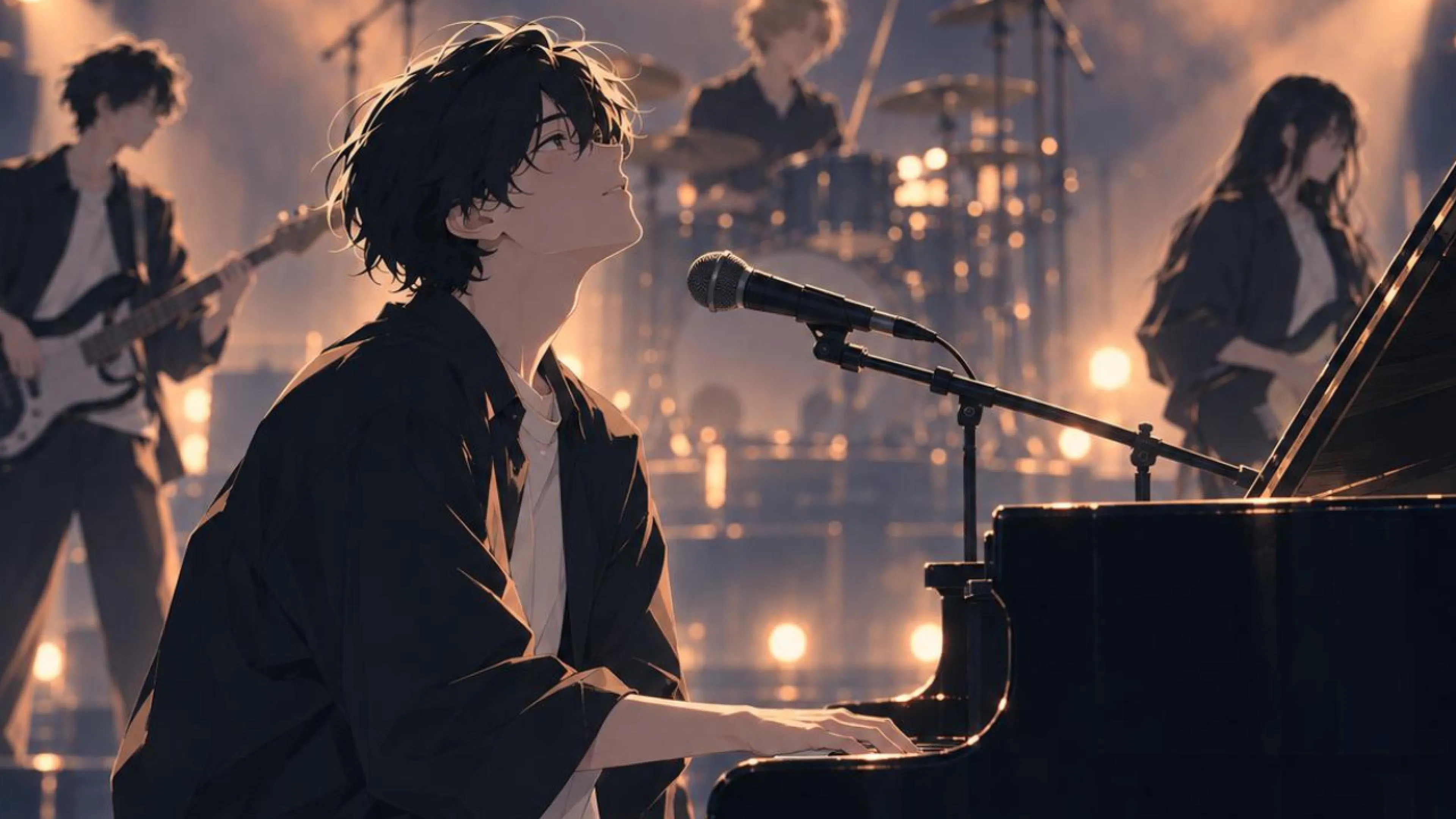
For “Boku no Oto,” I wanted to try telling a story across the whole music video. Its protagonist has suffered a setback in classical music. He moves to Tokyo, starts playing piano in a different setting, and gradually finds an audience for his own sound. The video follows him as far as a larger stage with a band.
The lyrics begin with chasing the “right” notes and end with the thought that he no longer needs someone else’s right answer. I used his hands and the pianos he sits at to connect those moments.
Three boards before the first cut
For the first time, I prepared an artboard and a scene board alongside the character sheet before making a full music video. The character sheet gathered the protagonist and the people around him. The artboard laid out the light and color of the practice room, station, city, and live stage. The scene board let me see how the story might move with the lyrics.
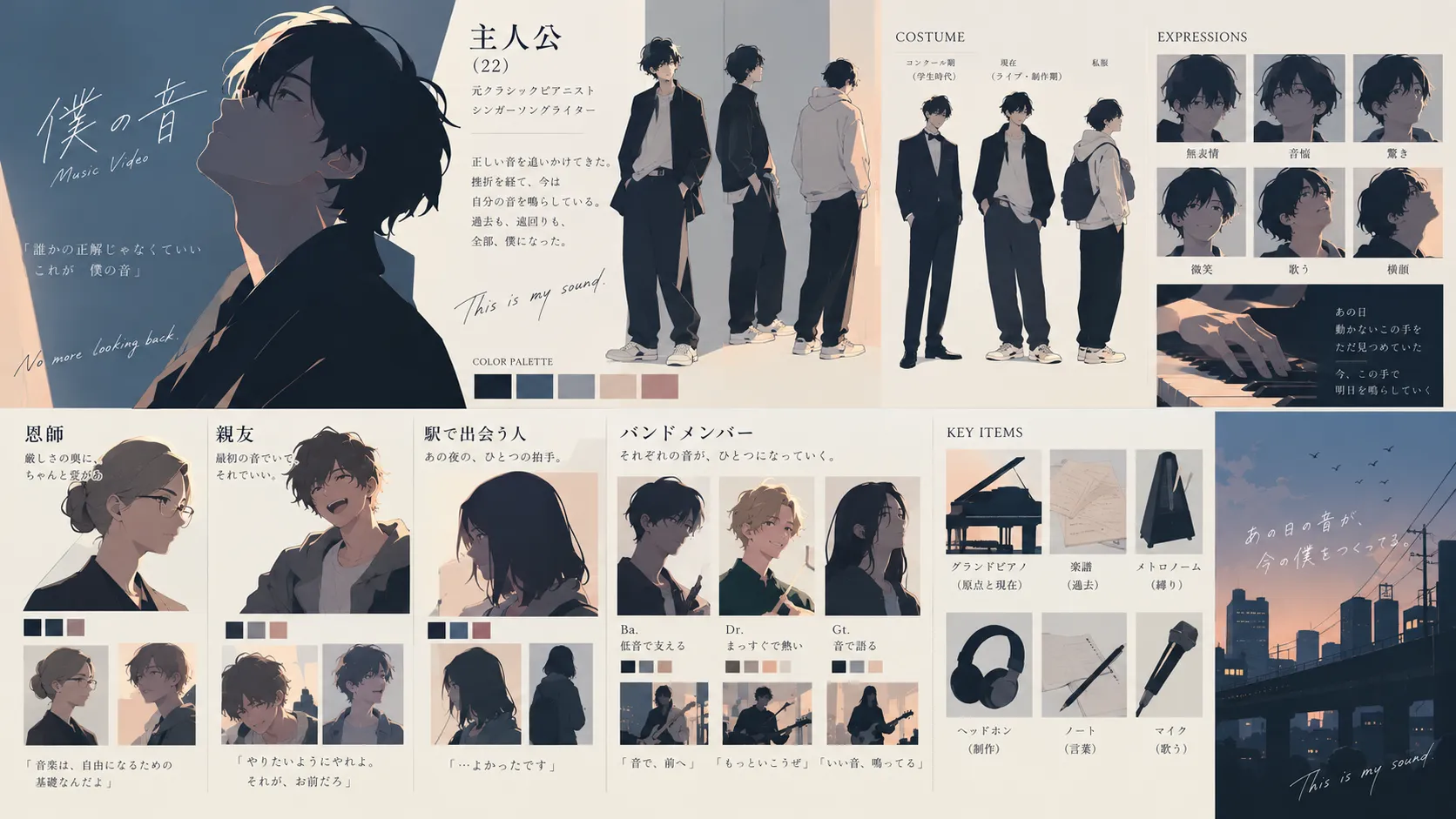
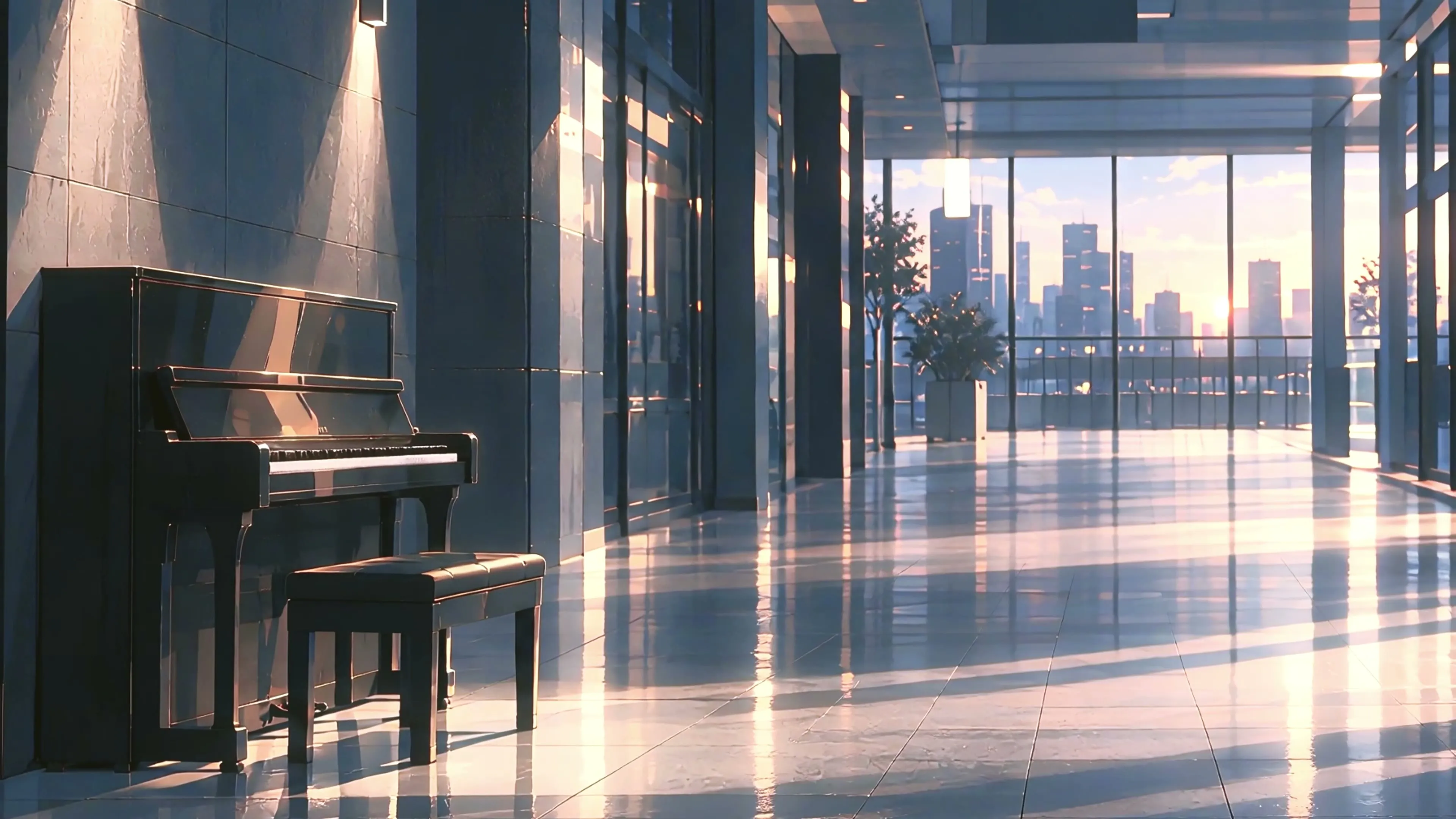
Some settings changed as I made the shots. The early boards showed a grand piano outdoors at the station. In the finished video, it became an upright piano in an indoor passage away from the ticket gates. I could see the whole story before starting the individual cuts, then adjust the details as the video took shape.
The hand that stops at the score
Early scenes return to a classical practice room and an annotated score. He looks at the hand that will not move. The lyric already says that he was afraid of making a mistake, so a pause at the keyboard can carry much of that feeling without adding a dramatic incident.
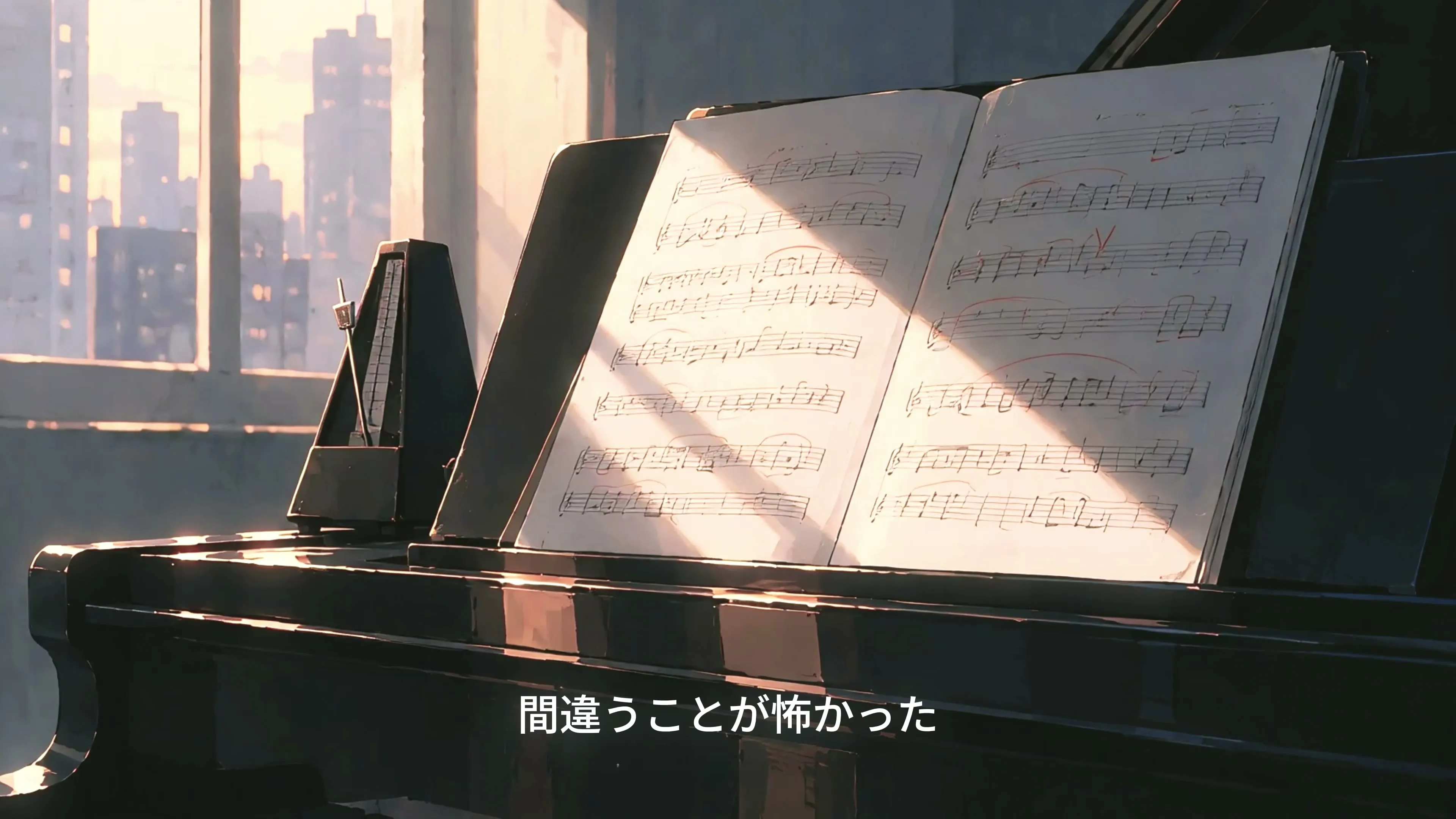
He then leaves for the city. Moving from the practice-room piano to a public piano in a station-connected passage gives that move a visible shape.
One listener, one round of applause
The song describes singing near an empty station and being moved by one person’s applause. In the video, the upright piano stands against a wall in an indoor passage, away from the ticket gates. One passerby stops to listen and applauds. I kept this moment between two people rather than filling the space with a crowd.
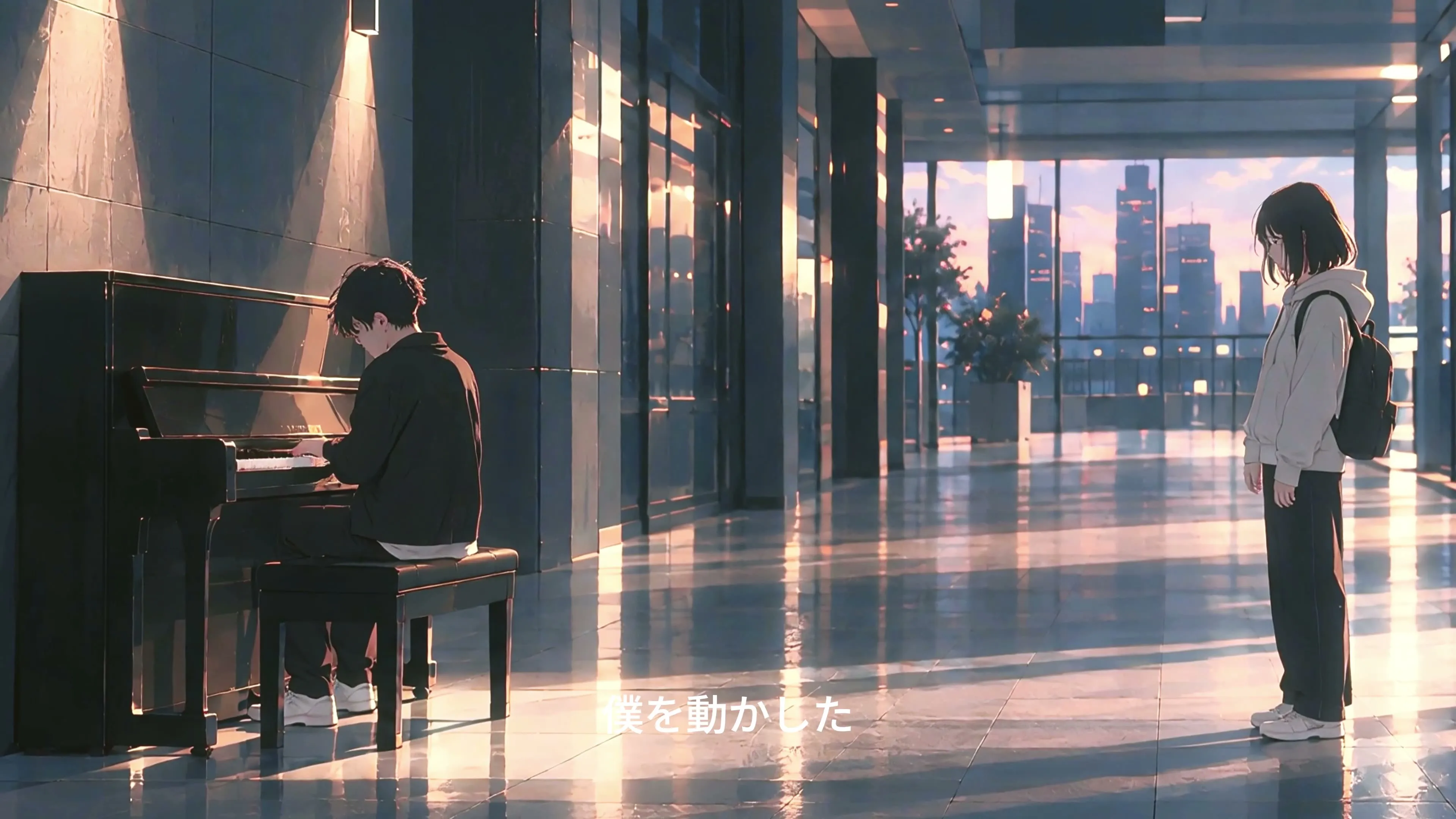
He does not have to erase his classical training to become someone new. As the chorus puts it, what he lost and the long way around have become part of him. That single response gives him a reason to try the next note.
Giving the change some time
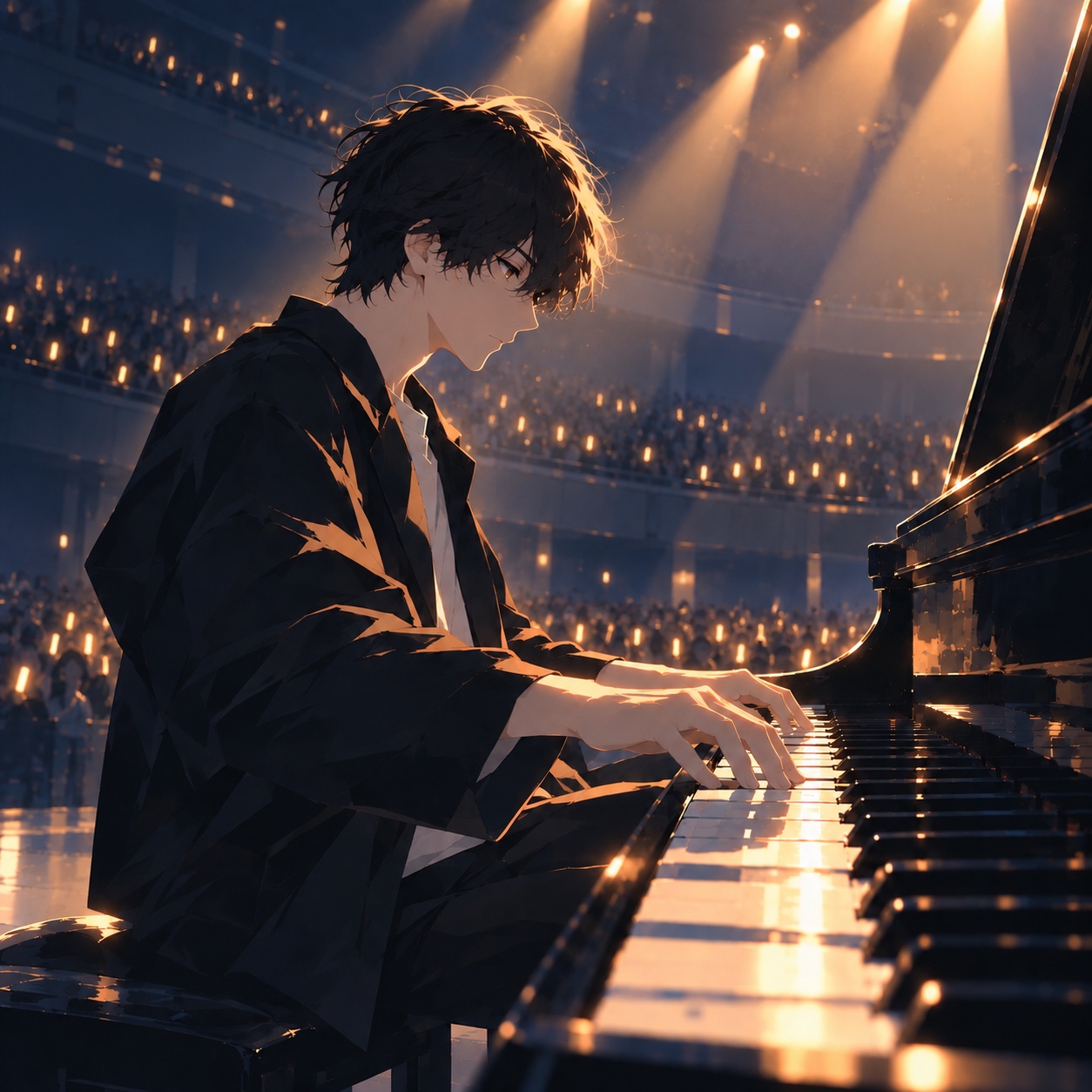
Jumping straight from the station to a large stage would make his journey feel sudden. The video pauses at a notebook in his room, a smaller piano performance, a friend, and a band rehearsal before the final concert. More people enter the frame as he keeps making music.
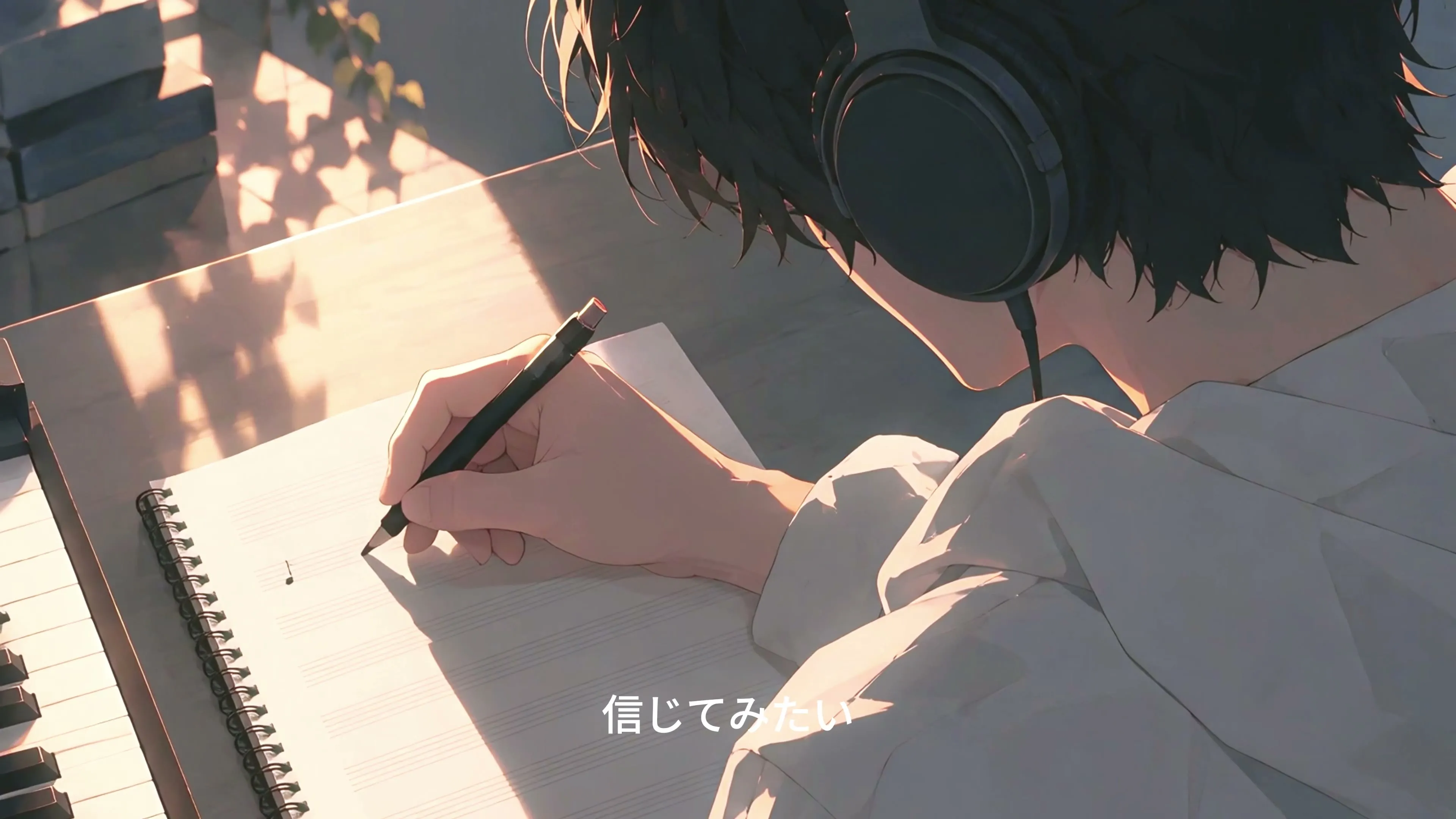
The song first reaches one person, then a small room, and finally a band stage. Between those performances, the video leaves room for him to write and choose what to play.
While building the storyboard, a second piano appeared in the background of one shot, and a notebook faced the wrong way for writing. I went back over the images and kept the station’s single upright separate from the single grand piano on stage. A picture can look convincing on its own while breaking the scene beside it.
Near the end of the edit, the empty station piano appears again. After the lights of the larger stage, it brings that first listener back to mind. I am still learning how to carry a story from the first note to the last frame, but this is the kind of music video I would like to keep making.
 industrial / piano rock僕の音Open the song page for audio, lyrics, and notes.Explore this song →
Thank you for reading.
← Back to the journal