
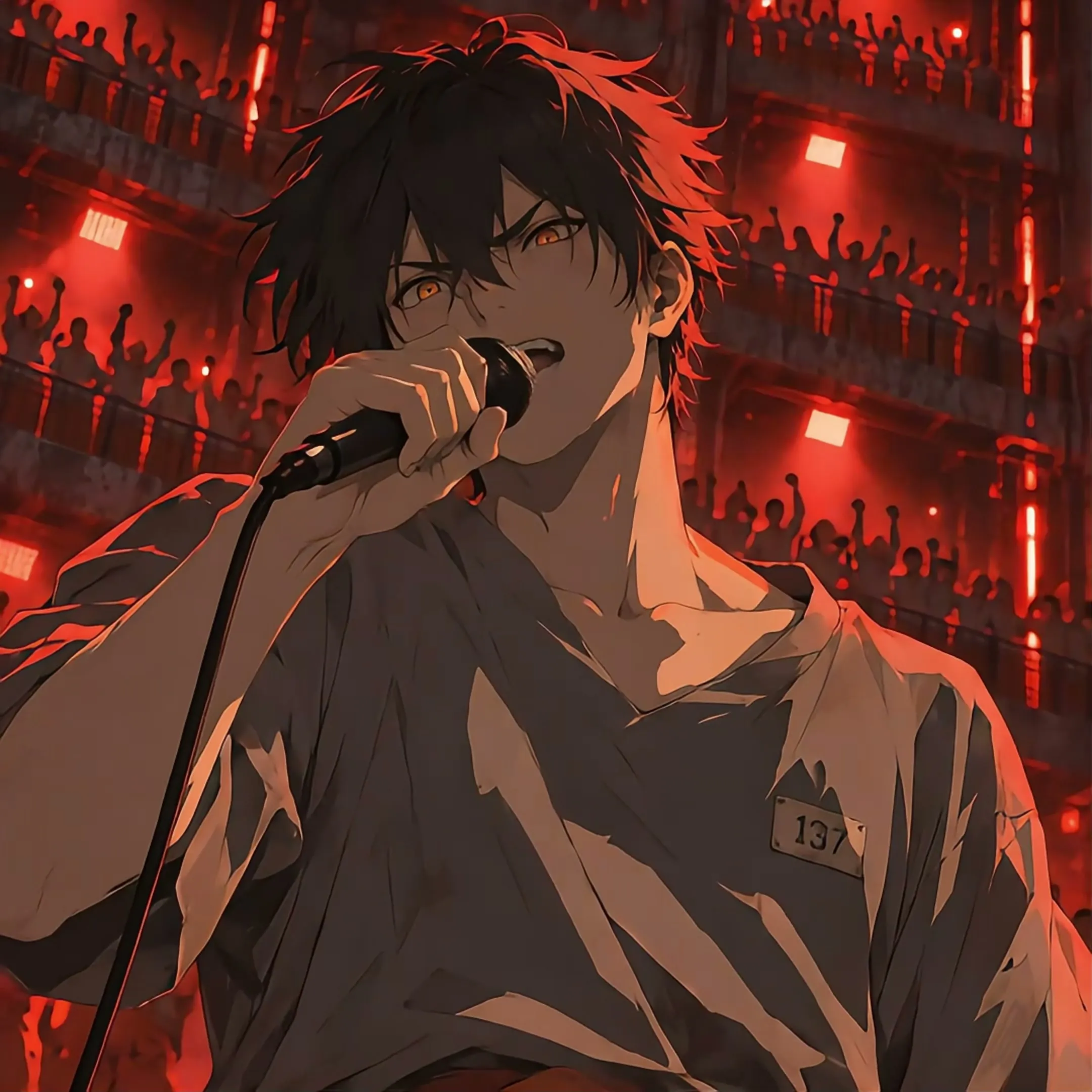
One person starts singing in an underground casino. The other prisoners answer, and eventually they all head for the surface. That is the thread I tried to carry through the whole song in ‘Chika Jojo.’
The starting point was, of course, that legendary manga.
People work underground and are drawn back to the gambling tables, trapped in the same closed world. In my song, I wanted the casino to become a live show: one voice drawing an answer from the room, until everyone starts moving upward together.
Red lights, gray work shirts, orange trousers. The protagonist is given the number ‘137’ in place of a name. The story follows him out of that repeated life and toward reclaiming his own name.
I used the character sheet and artboard as references for the people and their world: the cold underground colors, the casino red, and the morning light beyond the exit. They let me see the places the song would pass through while making the individual cuts.
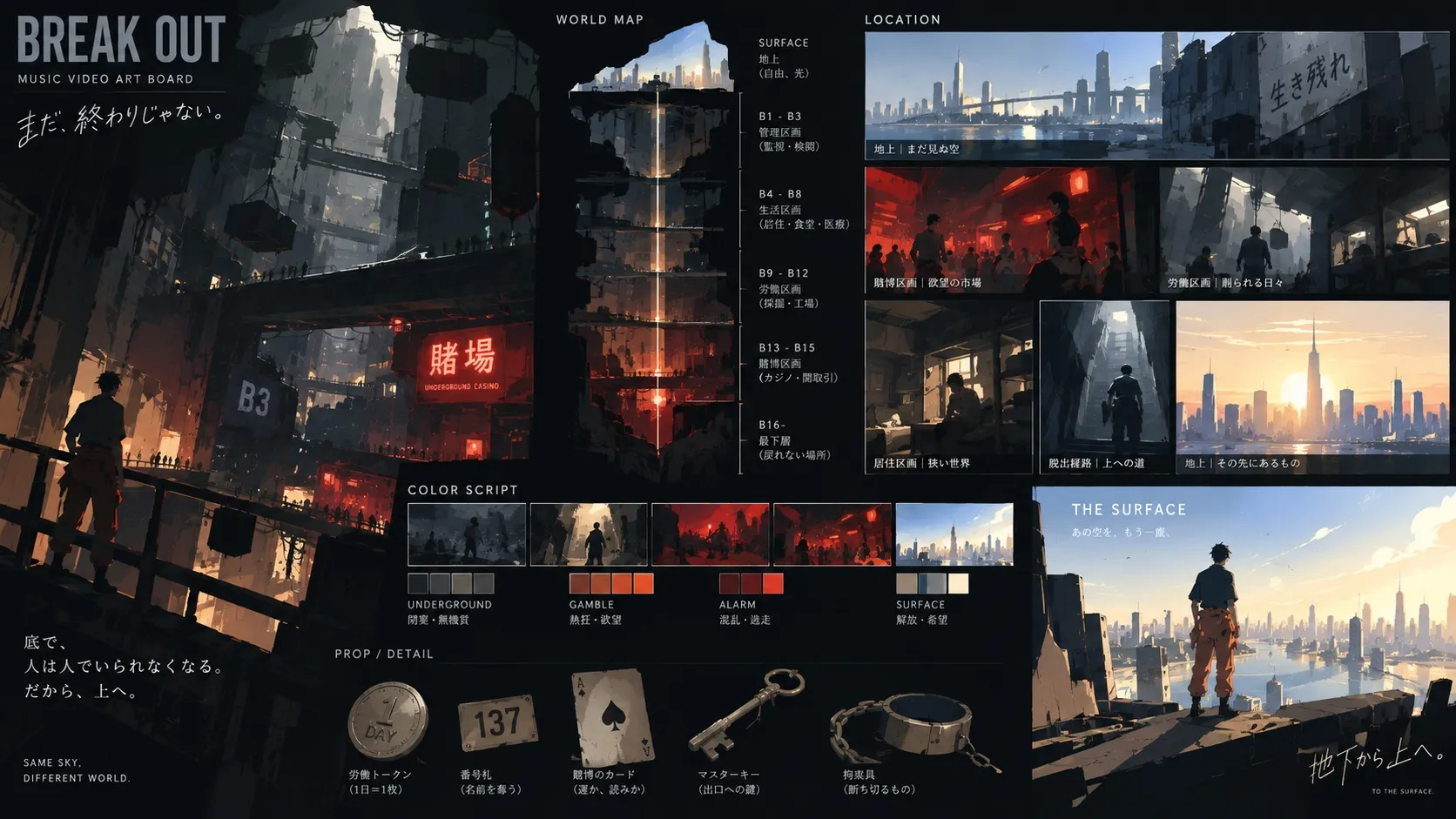
This project grew from making images into choosing and replacing video takes, adding lyrics, adapting the framing, and making the English version, ‘NO MORE CHAINS.’ Every review seemed to reveal another detail worth revisiting.
Letting the song reach the people around the singer
The first chorus is where the casino becomes a live show. The protagonist stands on a low card table with a microphone. The dealer, dressed in black, calls to the audience, and the prisoners answer. People who gathered to gamble begin shouting together.
The early sequence had too many similar frontal views of the protagonist and the dealer. Each image had energy on its own, but there was little change when they were put together.
I shifted the viewpoint between the singer’s close-up, shouting prisoners, feet landing on the floor, and people answering from the upper levels. I also included the boss, left apart from the room’s excitement.
I especially wanted the first chorus to begin on a close-up of the vocalist singing. Show the face making that sound as the vocal hits, then open out to the responses around him. I replaced both images and video to get that order.
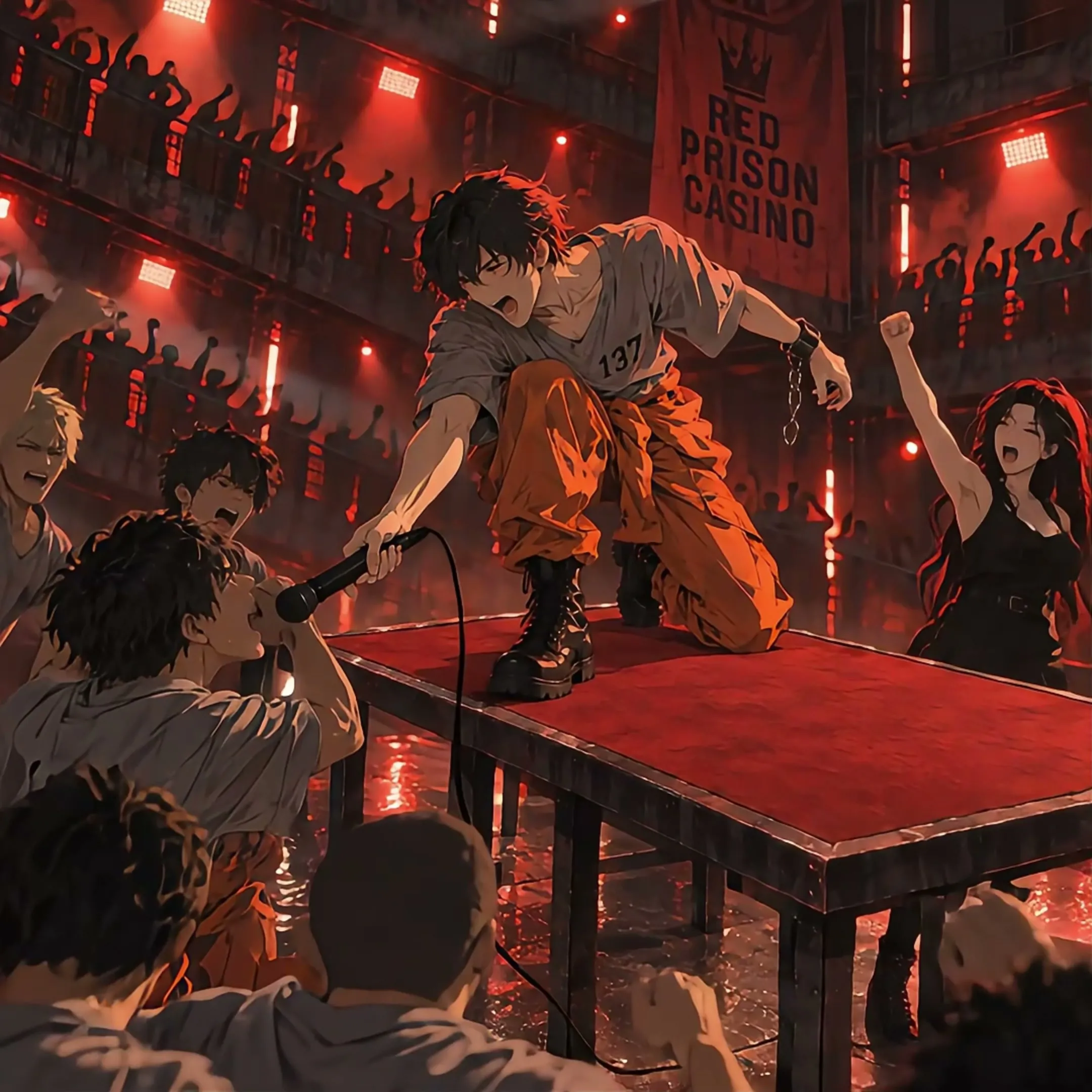
Moving between the singer and the audience helped give the chorus its momentum.
Choosing one useful second from a five-second take
When the video material came together, there were 116 files, most around five seconds long. With Codex, I sorted them and checked which source image each take came from and whether the drawing changed partway through. There were duplicate downloads and takes made from older images in the mix.
The motion had its own problems. A microphone meant to be handed over moved back toward the giver. A removed number badge returned to the chest. A face changed halfway through. A key acquired a glow I had not asked for. Useful and awkward moments could exist in the same five seconds.
I wanted frequent changes, with most cuts around one to three seconds. I chose short stretches where the movement read naturally, cutting before a take drifted, switching to another source, or cropping down to the expression I needed.
I also joined a walk that I had unnecessarily split into two cuts. More cuts do not add new information when they only break up the same ongoing motion.
The still-image animatic had 105 cuts. After choosing and reorganizing the video material, the Japanese edit had 89. That came from selecting what worked and combining overlapping roles.
Which wrist is the cuff on?
The protagonist’s hands needed repeated checks: cuff on his left wrist, key and microphone in his right hand.
The rule sounds simple, but frontal, rear, and angled views made it easy to confuse the character’s left and right with the sides of the screen. I revisited images I had first judged wrong, following the connection from shoulder to arm, wrist, and fingers, and checking the chest badge and camera position as well.
Some images could not be fixed with a horizontal flip. Moving the cuff to the other side could also reverse ‘137,’ the positions of the characters, or their direction of travel.
For some of those cuts, I replaced the wide view with a closer reaction. But a tighter crop leaves less source detail to work with. Removing one visual distraction could leave a softer image, so I had to consider both.
The background characters changed, too
One woman in the live-show crowd appeared to grow taller during the take. At first, I was watching the dealer in front and the energy of the whole frame. Comparing moments farther apart made the change in the background figure’s proportions more noticeable.
I reframed the shot around the dealer’s face and gesture, leaving the distracting figure outside the crop. It showed less of the crowd, but I kept the dealer’s call to the audience as this cut’s purpose. The neighboring shots carried the wider crowd energy.
A good first frame does not mean an AI-generated take will hold the same appearance throughout. I needed to look at the people moving behind the main character, too.
The upward stairs and the final door
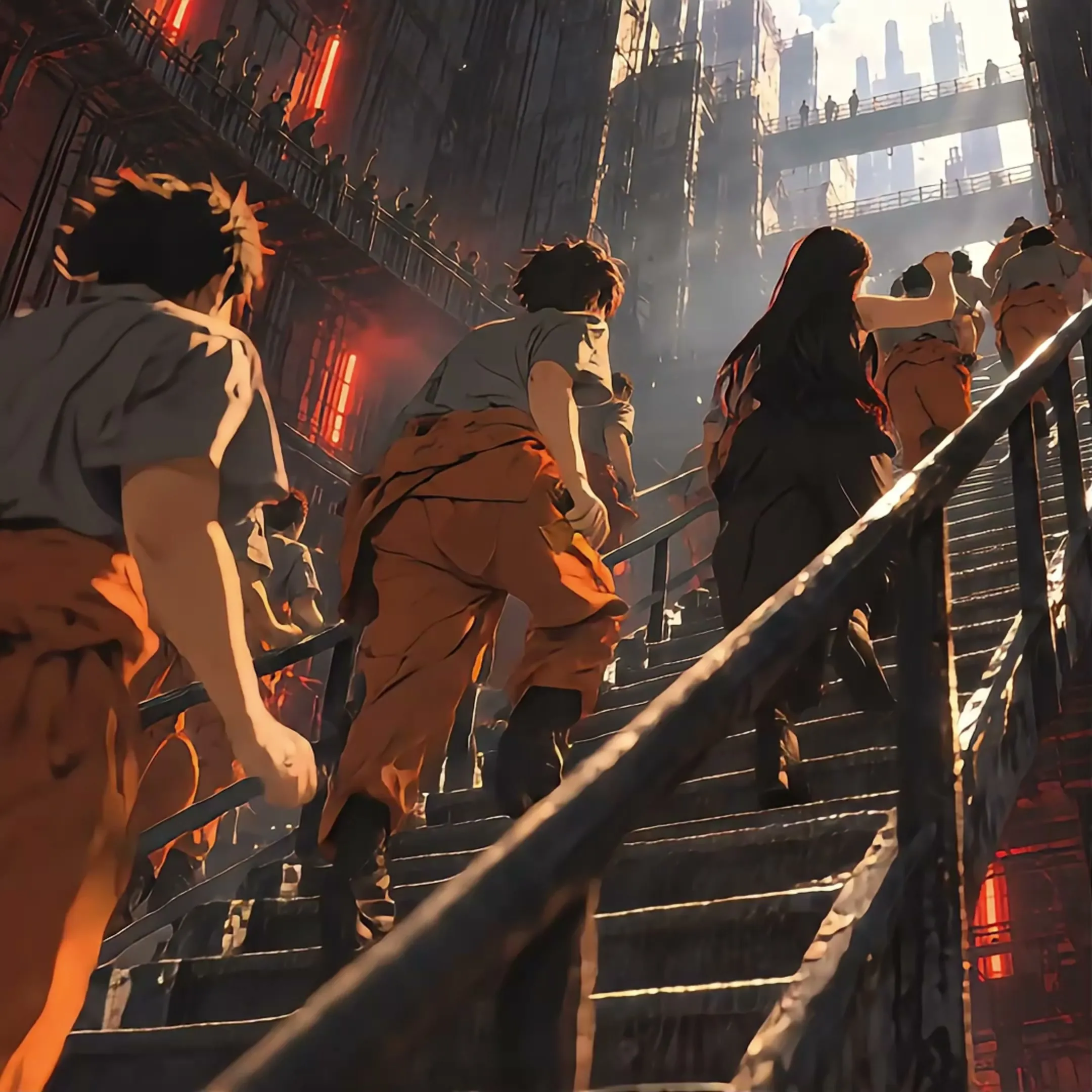
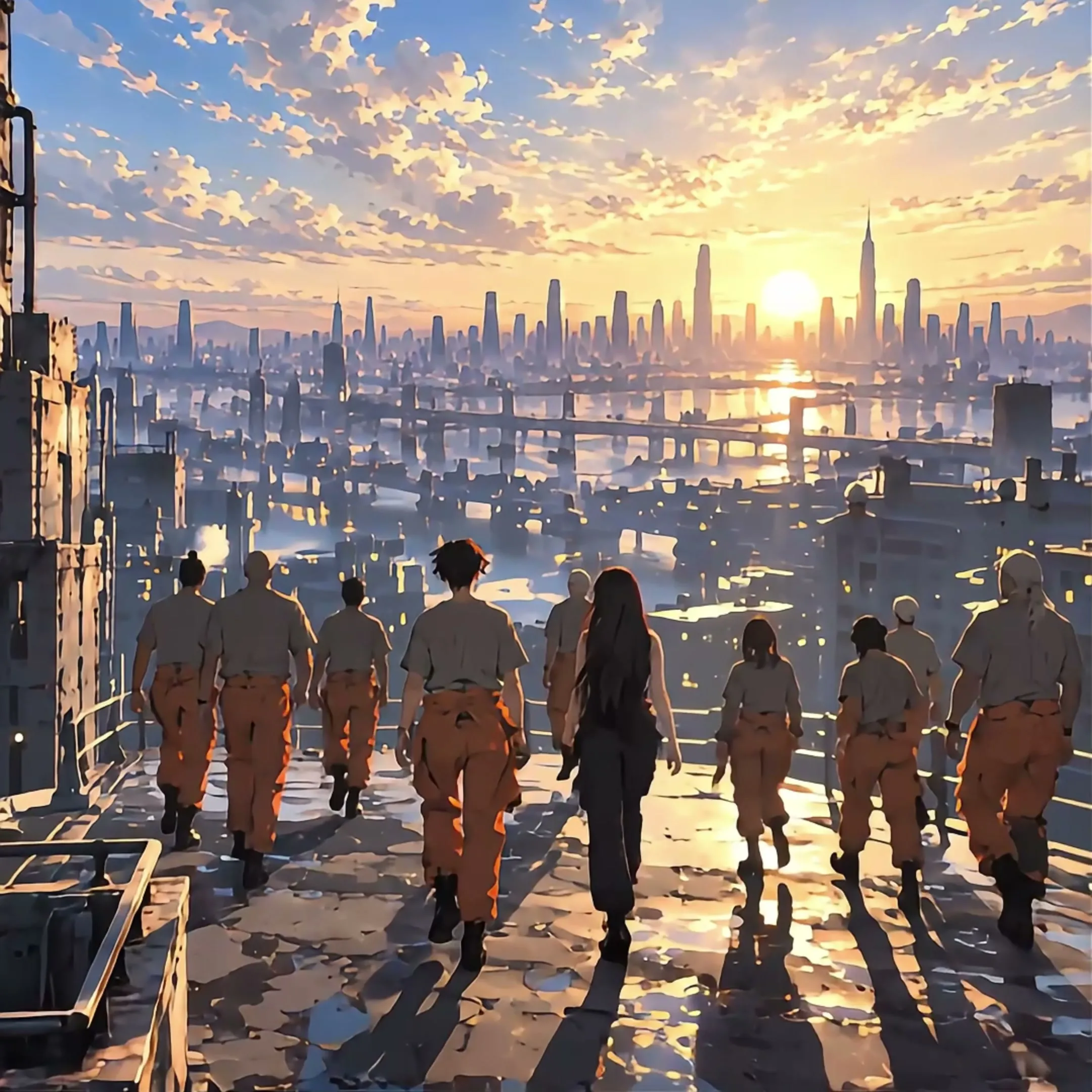
In the second half, the group escapes from the alarm-filled underground world. Some cuts were supposed to show an ascent but looked like a descent because of the body angle or foot placement.
A rear view alone did not make the direction clear. I checked the steps, the planted foot, and the next landing. Where too many backs were running up stairs in a row, I inserted companions helping the old man, pursuing guards, or an empty view through the shaft.
The last door was especially difficult to sequence. Approach the closed door. Use the key. See light through the opening. Step outside. Some takes showed a gap before the key was used, or made the door seem to open and close repeatedly.
I prepared replacement images and video prompts, but one take did not always deliver the entire action naturally. I joined a short stable hand detail to the view after the door had opened, making the before and after states easier to follow.
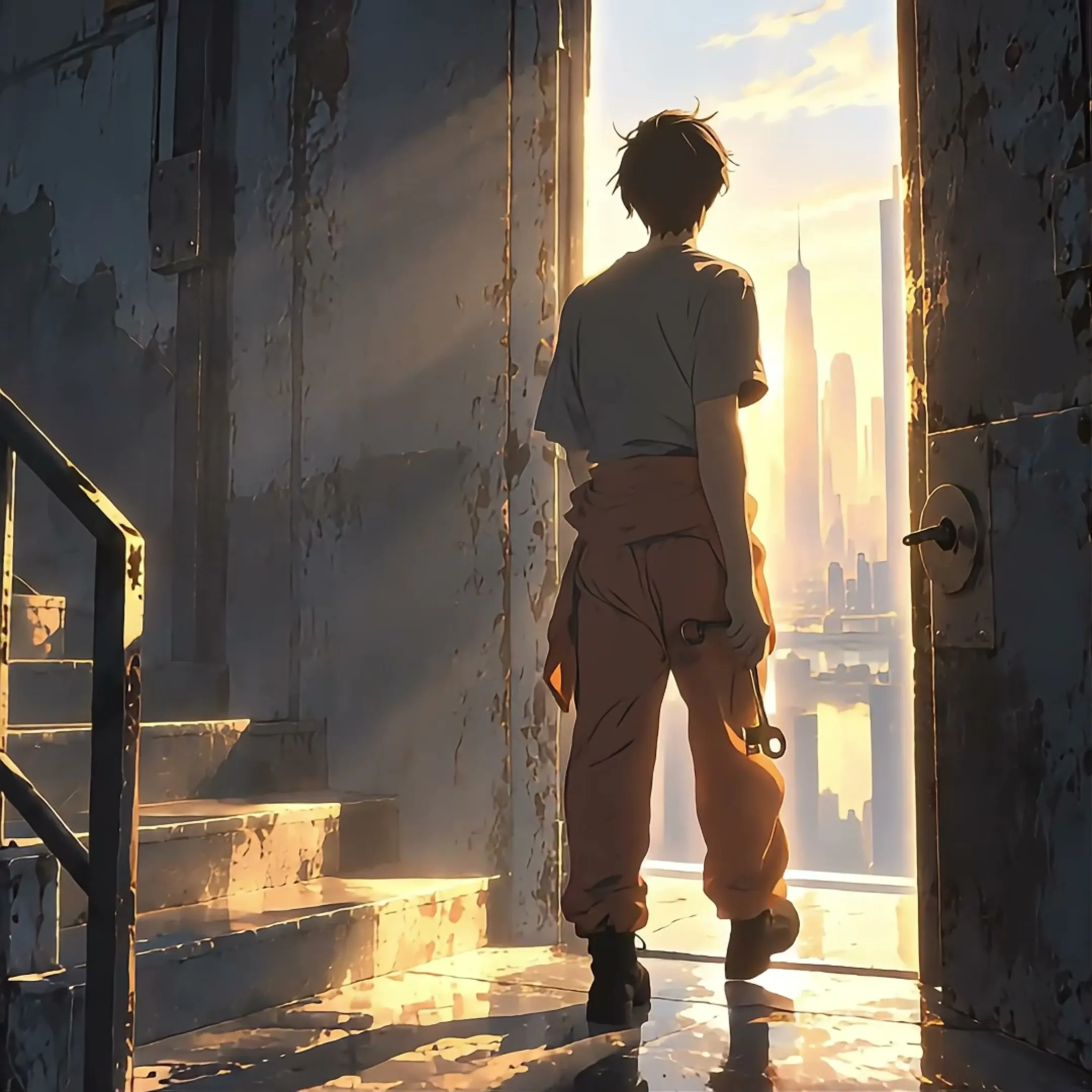
On the surface, I also reordered the ending: remove the badge, show ‘137’ on the floor, look at the sky, then walk away. I wanted that part to make clear what the protagonist was leaving behind.
Returning to the subtitle size
I put the lyrics directly over the image in white, following my earlier videos. No background strip, outline, or shadow, and no extra explanatory captions. The first adjustment still made the type too large.
I compared earlier videos and screenshots, changing the weight, position, and size a few times before settling on 32 as the reference setting. That number also needed a reference canvas: square, landscape, and portrait frames change how the text fits and where it meets the people on screen.
Framing the picture raised similar questions. Some portrait crops could not keep both faces; some landscape crops cut a face at the top. I chose the essential subject again for each shot, whether that was a face, a key, or a footstep.
I brought the CapCut exports together with the music and lyrics. Adapting the screen shape involved more small decisions than I had expected.
Editing again for the English recording
After working on the Japanese version, I made ‘NO MORE CHAINS’ in English. Both videos are now public on separate YouTube accounts. The English version is presented under the name Carpin Music.
The two recordings are very close in total length, but their vocal entries, chorus attacks, chants, and instrumental gaps do not all land in the same place. I retimed the cuts against the actual English performance. Where it had extra space, I added an empty staircase and an upward view through the shaft.
The English edit has 91 cuts. I prepared the full video and first-chorus excerpt in square, landscape, and portrait formats, with thumbnails and descriptions using the English title.
I have also been comparing the lyric draft with the recording. I kept passages needing confirmation separate from the machine recognition results. Retiming the picture and matching every English mouth movement are different tasks, so the singing close-ups remain something to check carefully.
Two languages, two YouTube accounts
‘Chika Jojo’ and ‘NO MORE CHAINS’ are both public on YouTube. The English release uses an account separate from the Japanese one.
The arrangement is both language versions on Suno, Japanese on TikTok, and separate YouTube accounts for Japanese and English. These two YouTube releases are a step toward delivering the work in that form.
The visual world stays the same, but changing the singing language changes the vocal entries and the breathing space before the chorus. I re-edited against the English performance and prepared English captions, thumbnails, and descriptions.
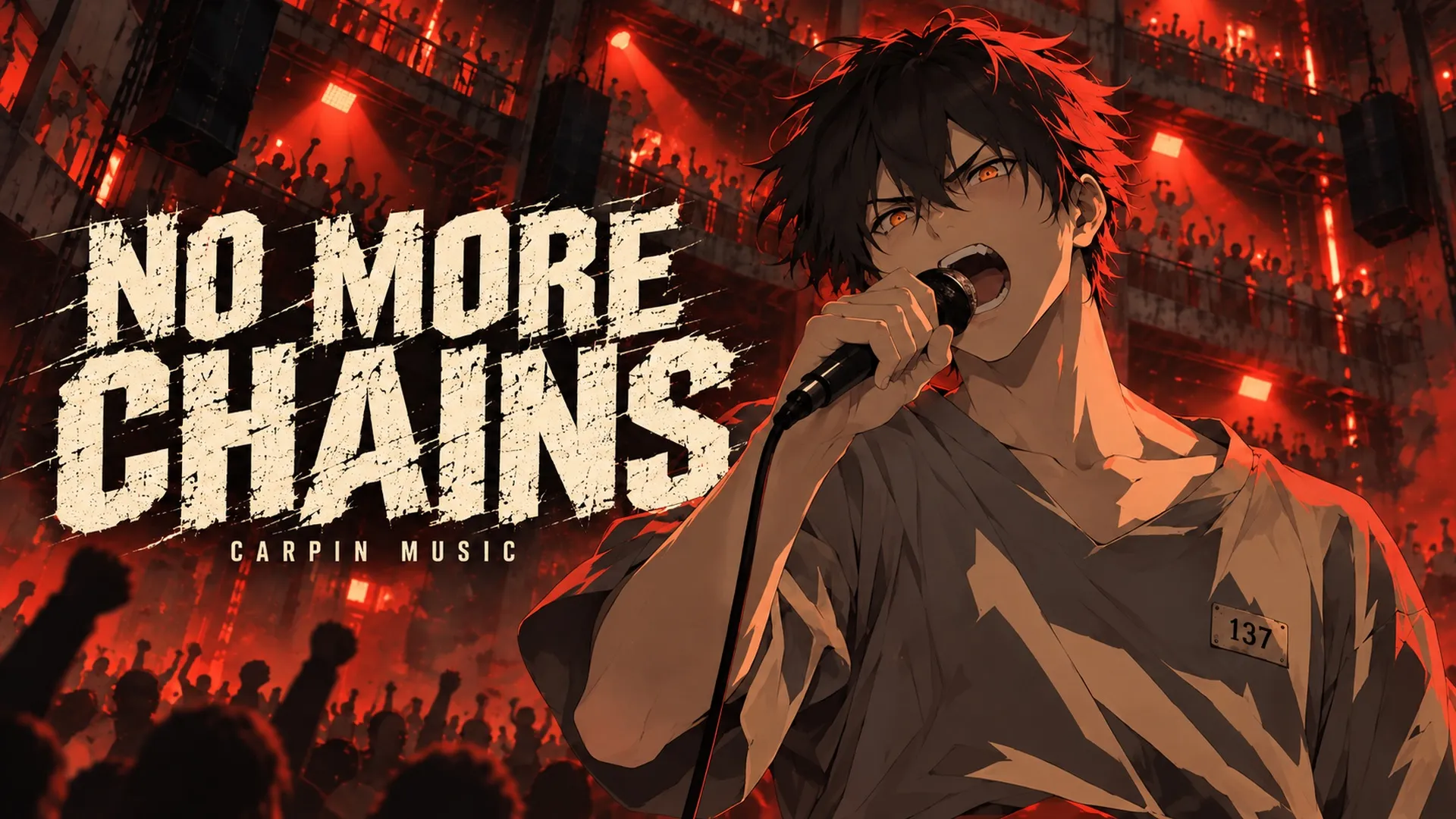
This project gave me a reason to consider where a version should live as well as how it should sound. Publishing the same underground story in both Japanese and English was another part of what grew during this production.
Audio and lyrics: Japanese recording · English recording.
I went back to the images and takes many times. A cut I liked could acquire a different meaning beside its neighbors. Through those revisions, I kept wanting the same thread to remain: the prisoners answer the singer, then everyone heads upward together.
There are still details I want to check, but I have recorded the problems and the choices made along the way, so the next project does not have to begin with the same uncertainty.
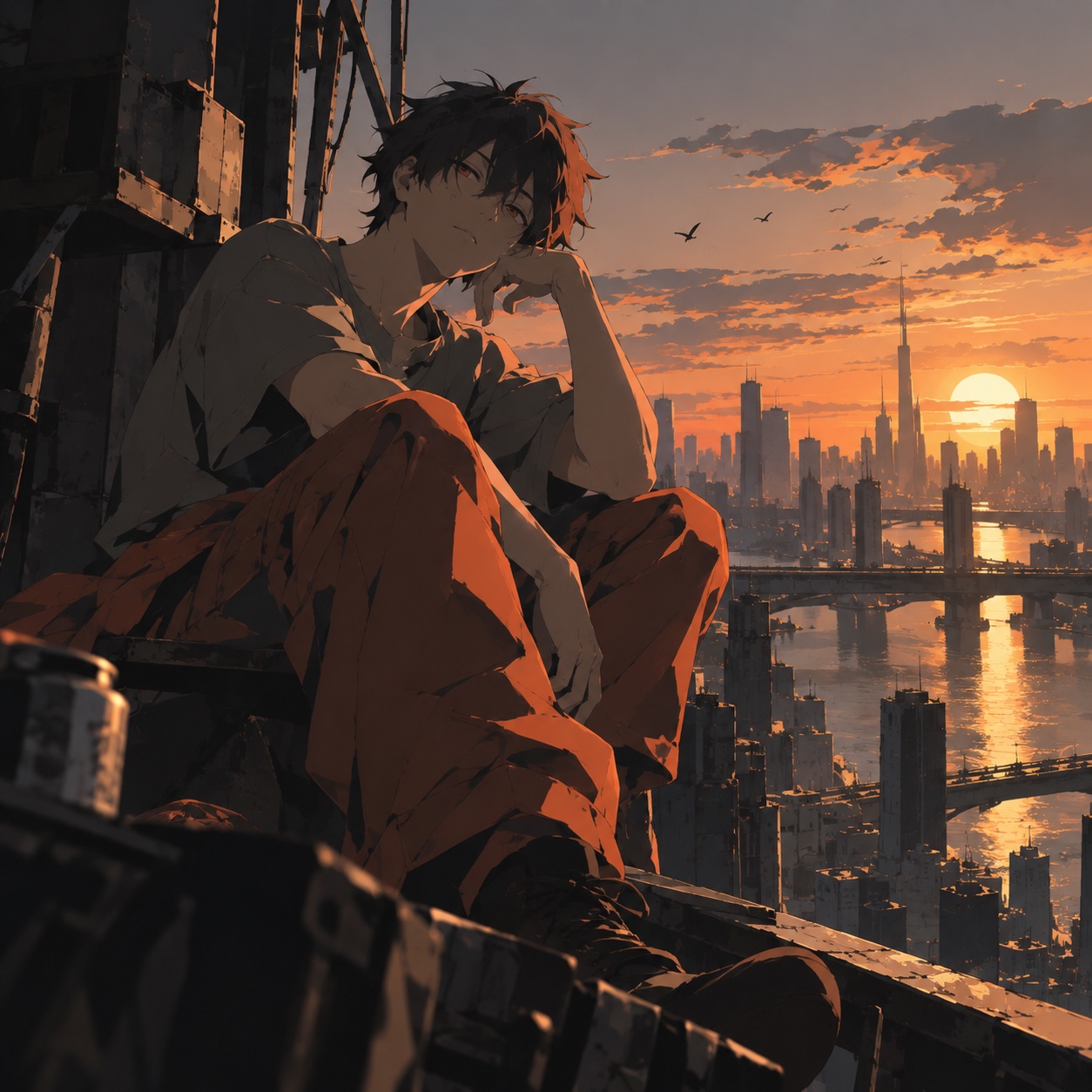
One voice spreads through the room, and the story ends under an open sky. I have now published that journey in Japanese and English. I would be glad if either language became someone’s way into this underground world.
 industrial rock / rap地下上々Open the song page for audio, lyrics, and notes.Explore this song →
Thank you for reading.
← Back to the journal