
Stone arches crossing a hillside city. Buildings passing beyond a tram window. Two travelers in dark jackets and pale yellow hoodies.
For this project, I revisited Mikansei no Mama, a song I made in 2025, and created a new animated music video. Its travelers get lost, struggle to make themselves understood, and take another step anyway. I wanted to follow those two backpackers through the journey together.
The Japanese recording is Mikansei no Mama (Remastered), and the English version is Left Unfinished.
The Japanese song, “Mikansei no Mama,” is available as track 5 on the album Pop 2025. Choose a streaming service via TuneCore.
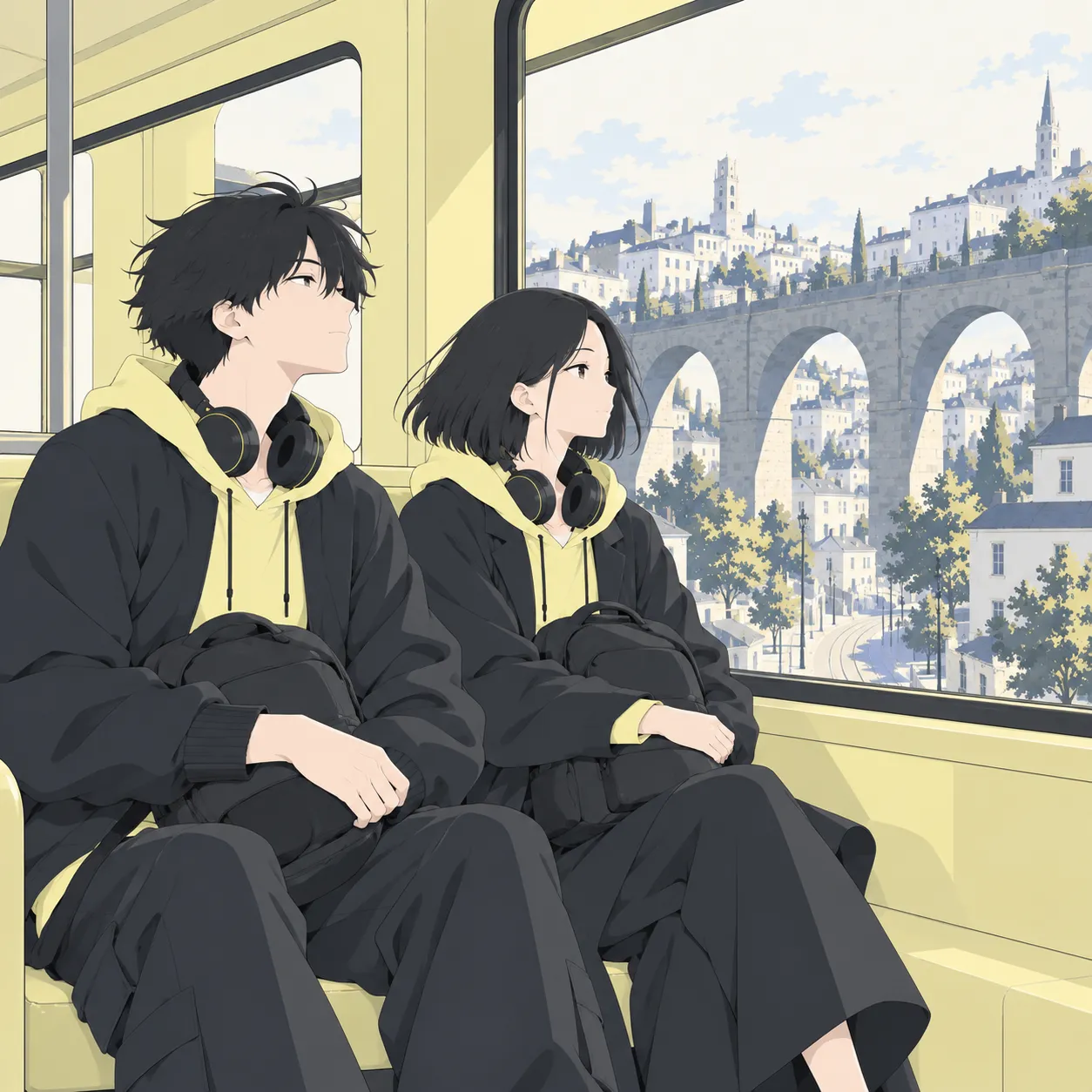
Giving an older song another journey
I had already released a song and music video called Mikansei no Mama. The earlier video came out in November 2025. This time, I rebuilt the characters, landscapes, and scene connections around the remastered recording.
The original song runs for about three minutes and twenty seconds; the Japanese remaster is about two minutes and forty seconds. Comparing their published lyrics, the short hook, bridge, and third verse in the original are absent from the Japanese remaster.
What remains includes the one-way ticket, the torn guidebook, food stalls in an unfamiliar town, and a smile after getting the words wrong. The Japanese song still begins by setting out empty-handed and ends by coming home the same way.
The earlier Mikansei no Mama video is still available alongside this version.
Making the yellow a little paler
The starting material included images and videos with a vivid yellow-and-black palette, two people holding microphones, and headphones around their necks. I wanted to retain that look and its natural fit with the rap sections.
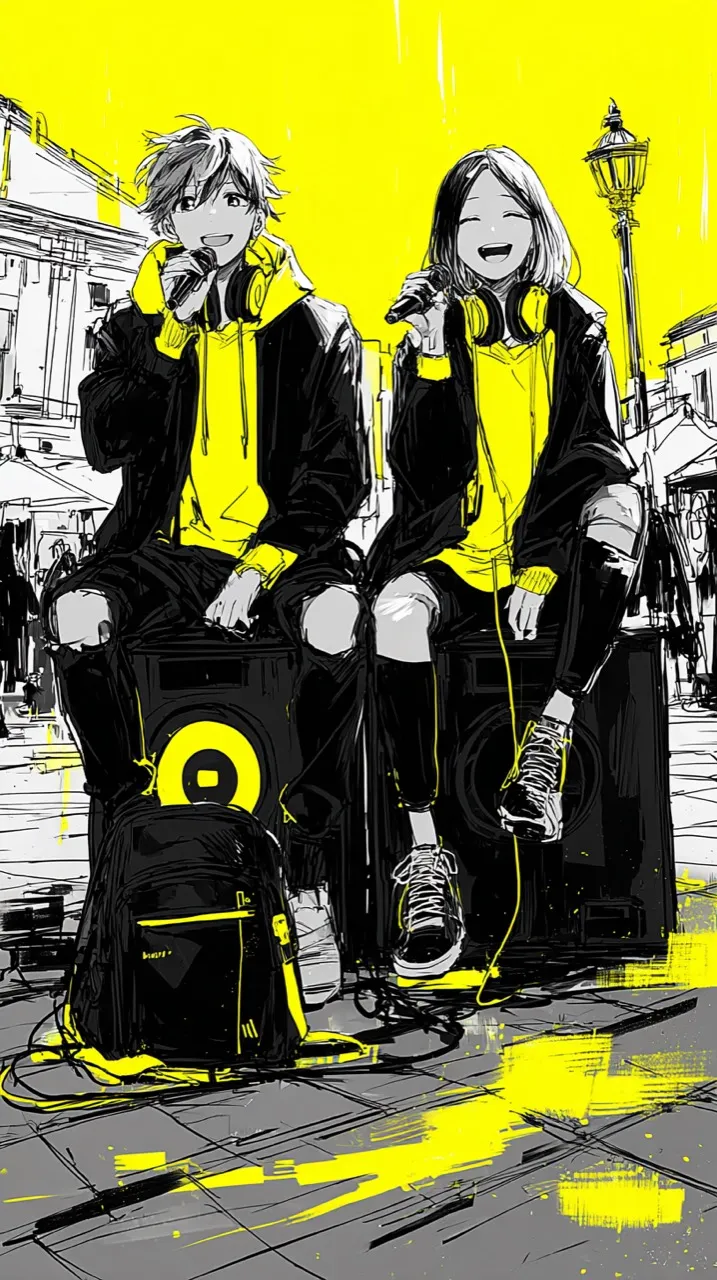
I developed the pair as backpackers: dark hair, loose outerwear, yellow hoodies, and backpacks. They needed to feel at home both singing and walking through a city they did not know.
I adjusted the yellow several times, making it paler and balancing it against white buildings, blue-gray shadows, and dark clothes. I also wanted fewer lines, light contours, and shadows laid down as large areas of a single color—the kind of economical drawing that suggests an animator’s hand.
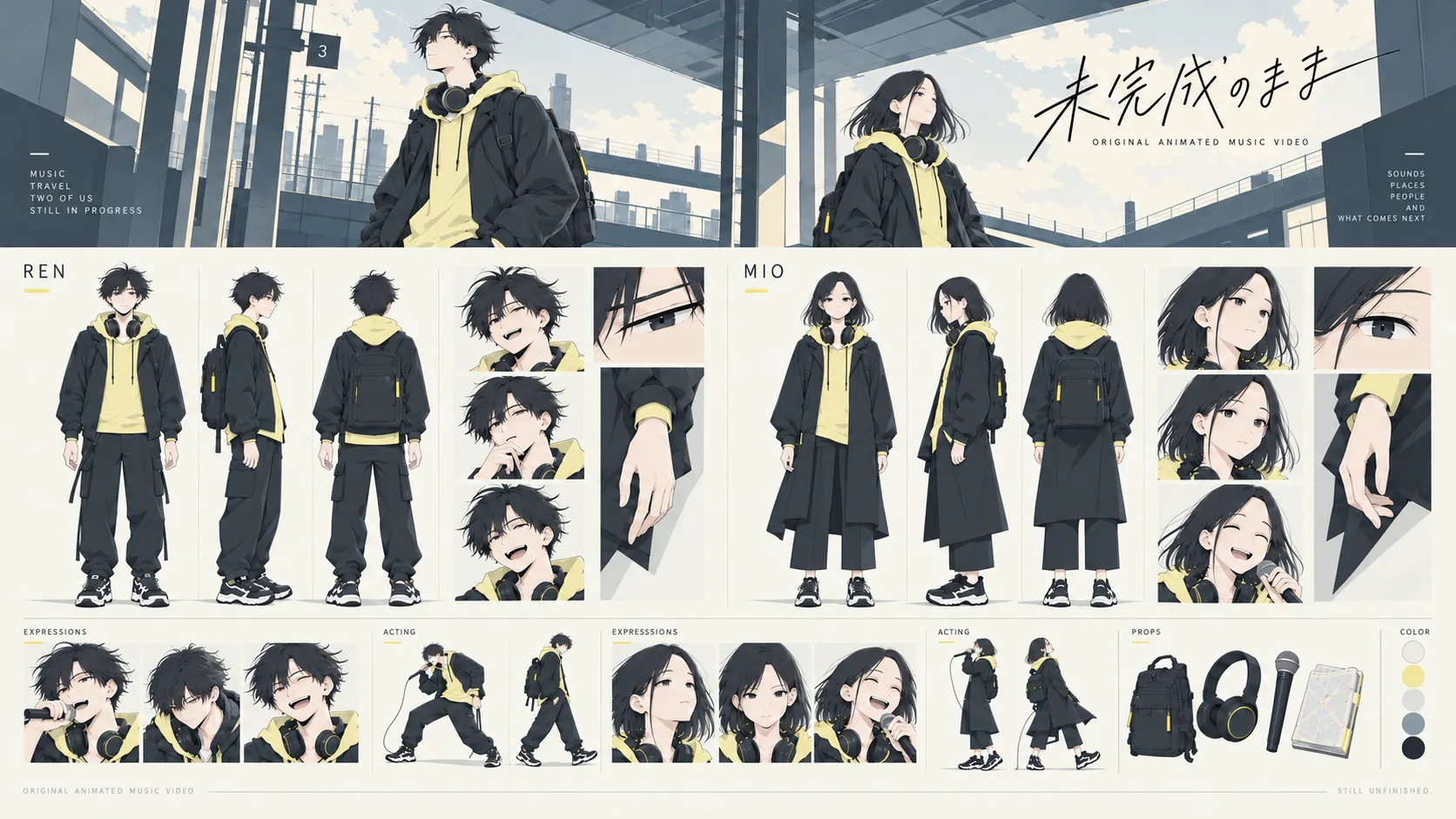
Keeping the two on the same journey
The settings include stone streets and slopes, a harbor, a ferry, and night stalls. I wanted room for grand views as well as small encounters within the city.
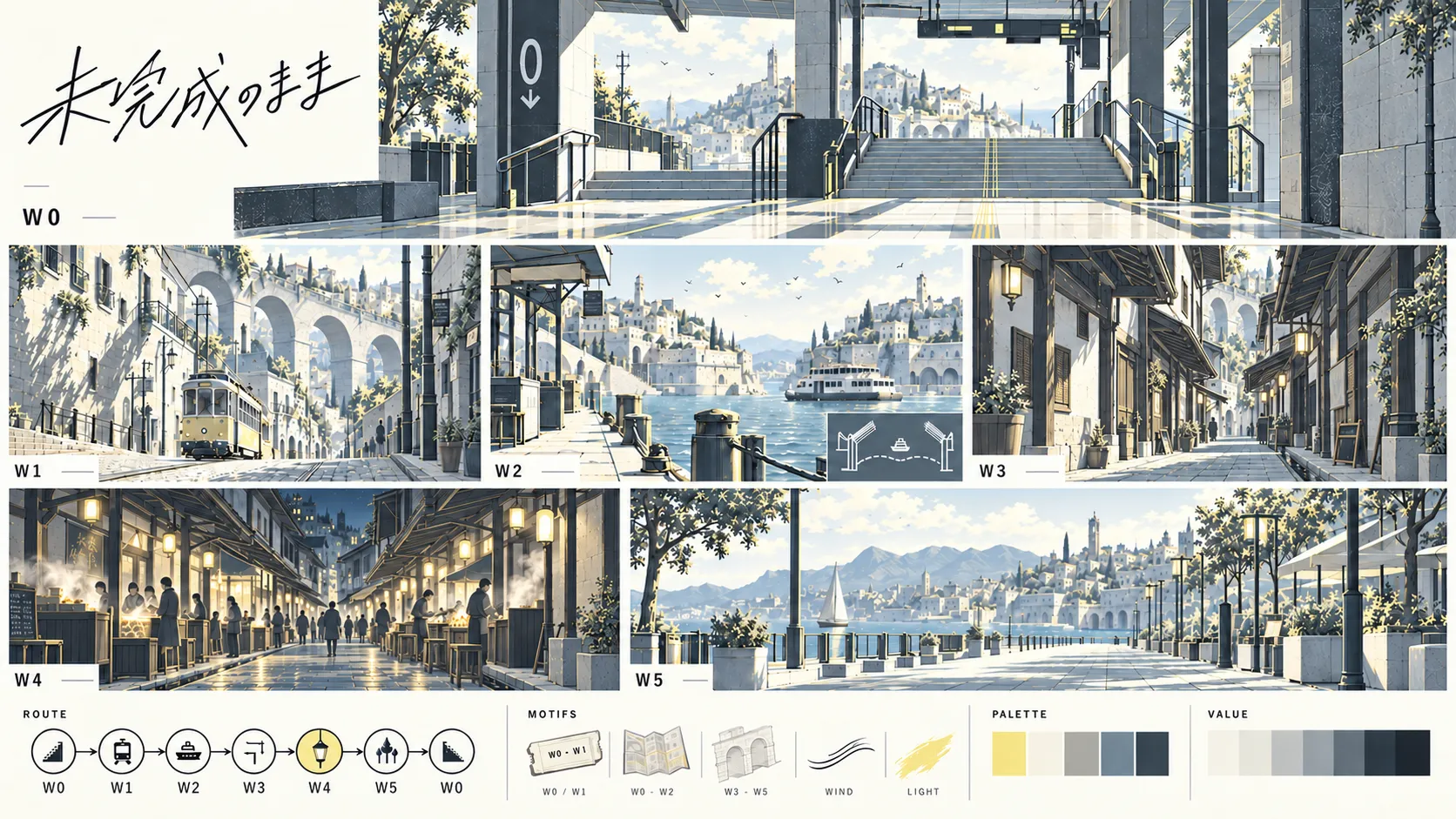
One version of the sequence made the two seem to travel separately, then reunite without enough explanation. If they had each taken a different boat, meeting up so easily afterward did not make sense. It worked better to have them travel together.
I reorganized the route around a shared tram window, the same ferry, and walking side by side after arriving. Each new location needed to feel like somewhere both had reached.
Letting the song open on the city
The opening needed particular attention.
I tried placing a singing character at the first vocal line, but it felt as though I was forcing a performance shot into that space.
There was also a landscape I wanted to use: a broad view of stone arches and layered buildings. The Japanese edit now begins by holding that city for about five seconds, then moves to the tram, their arrival, and the walk beyond it.
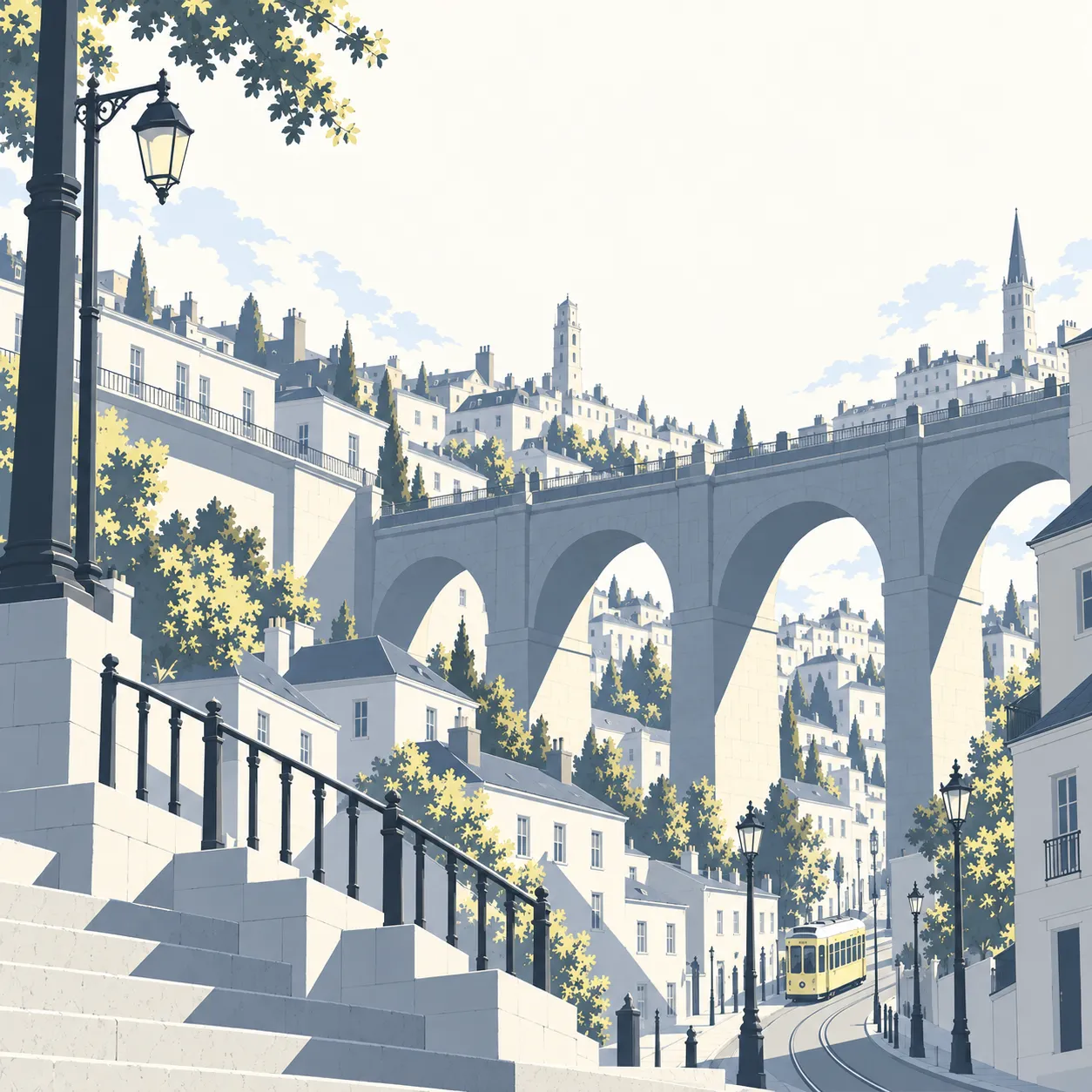
A beautiful image flashed for an instant can disappear before there is time to take it in. I kept returning to the length of each shot, giving faces and the light across a street enough time to register.
Singing and open space in the choruses
I kept performance scenes in the choruses. A continuous run of microphone shots, though, weakened the sense of travel. I mixed the duets with waterfront views, city landscapes, expressions in the wind, and the two walking or running.
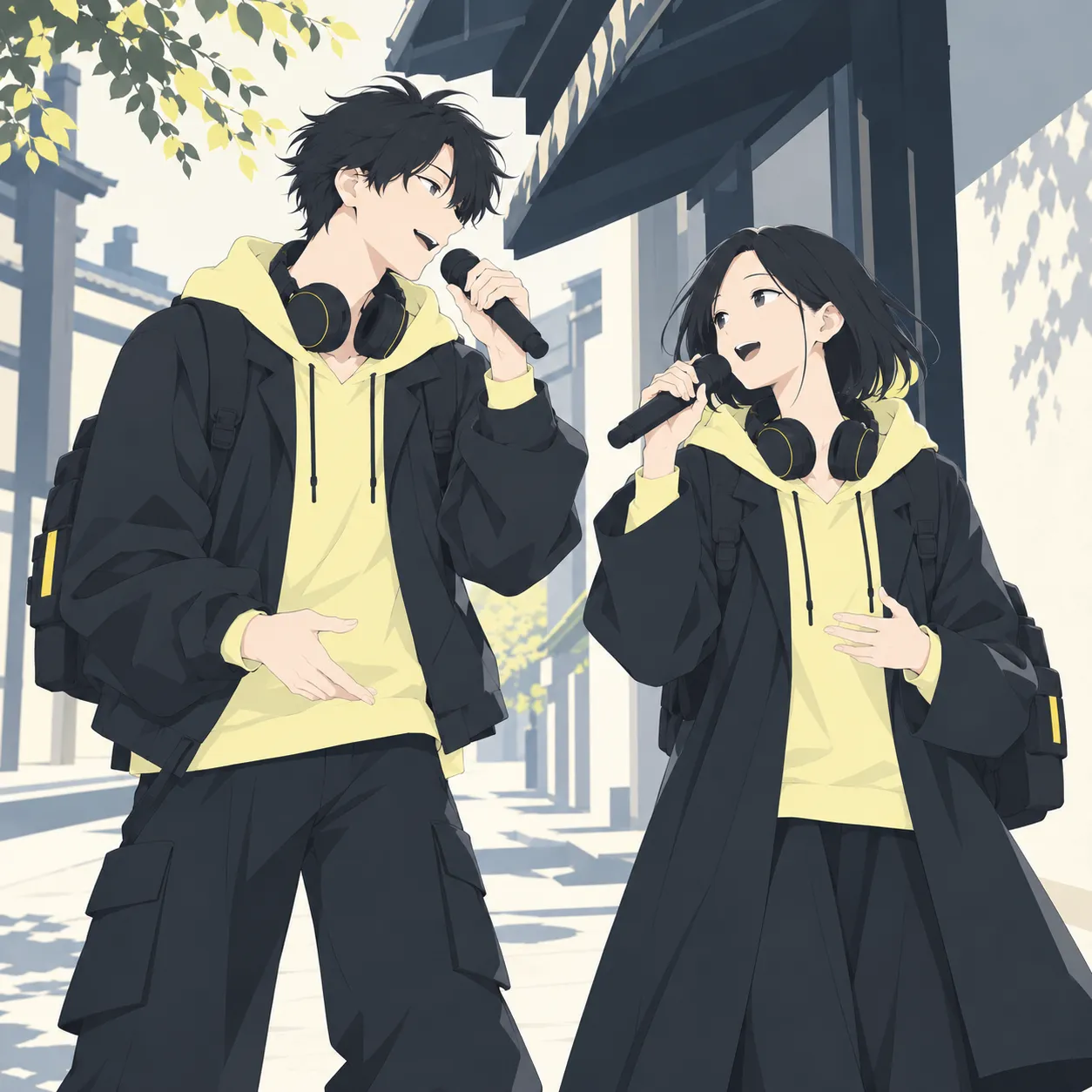
Another distraction was seeing only the woman appear to sing while the male vocal continued. I revised those moments, sometimes choosing a different take and sometimes using a scene without singing.
I wanted to keep the duets, then find a comfortable movement between close faces and wider surroundings. The order of the shots mattered within the chorus as much as the individual images.
Choosing the few seconds that work
Some clips had a good expression or background but could not be used all the way through. In a food-stall shot, an unnatural arm appeared behind the characters partway through. I chose the stable beginning of that same clip.
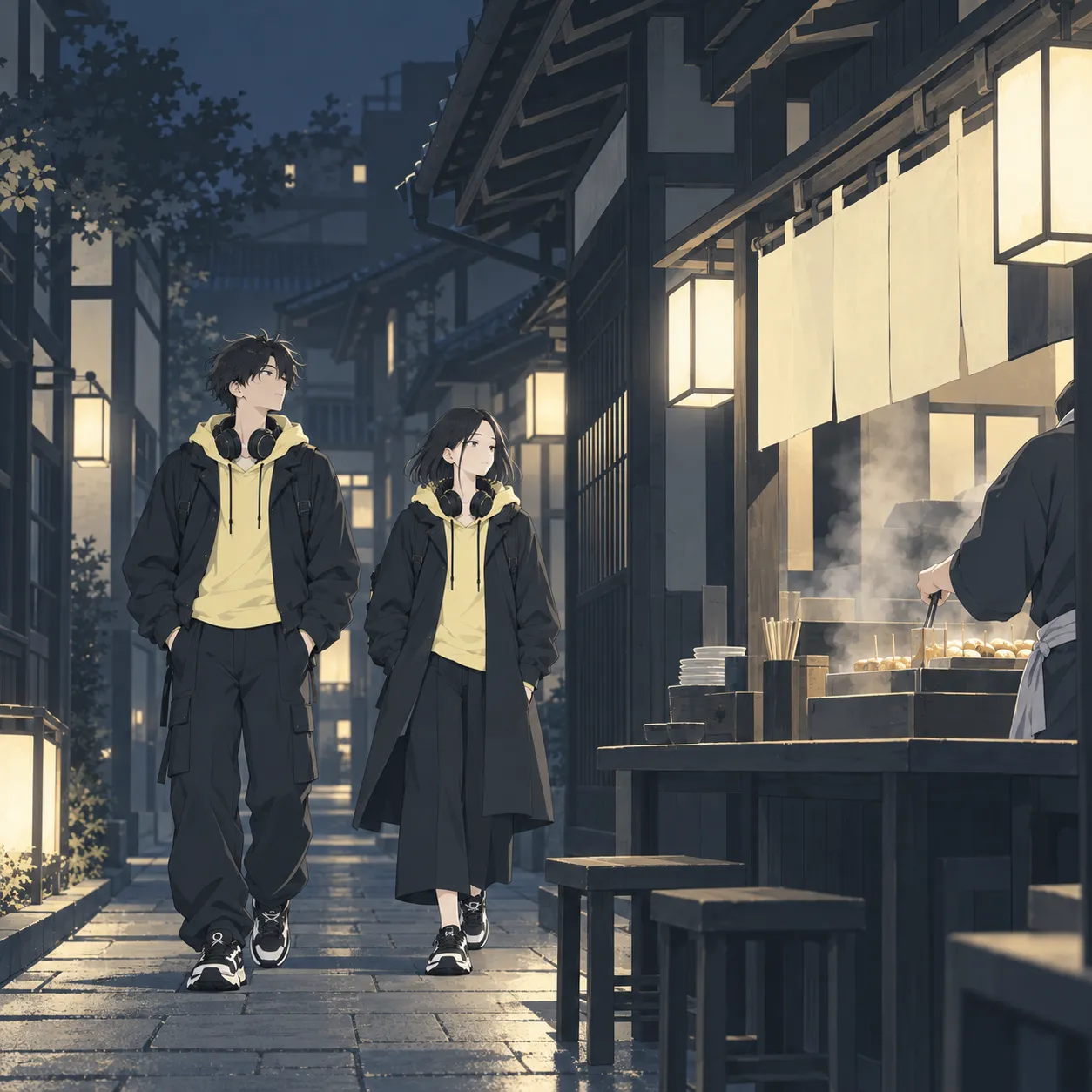
Near the end, I also had a sequence that showed them already running and then starting to run in the next shot. Individually, the images seemed fine; together, they made time appear to jump backward.
Sing. Lower the microphones. Start running. Run together.
I reordered the material around that progression and connected it to the walk after their return. The plan had originally involved close to a hundred source images. The final Japanese edit uses 57 cuts, selected and timed against the available footage, including spare takes.
Following the English recording
Left Unfinished uses a separate English vocal recording. Its length differs from the Japanese version, so replacing the soundtrack alone would not work. I adapted the ranges and timing of the same picture material to the English structure.
Its English lyrics also include a bridge corresponding to the original Japanese passage about choosing not to go home. The Japanese remaster and English version carry slightly different words along the journey.
I prepared square and widescreen full-length versions, plus a vertical version using the second chorus. For widescreen, I retained the source picture’s full width and adjusted the vertical framing shot by shot. The plain white lyrics stay fixed near the bottom center.
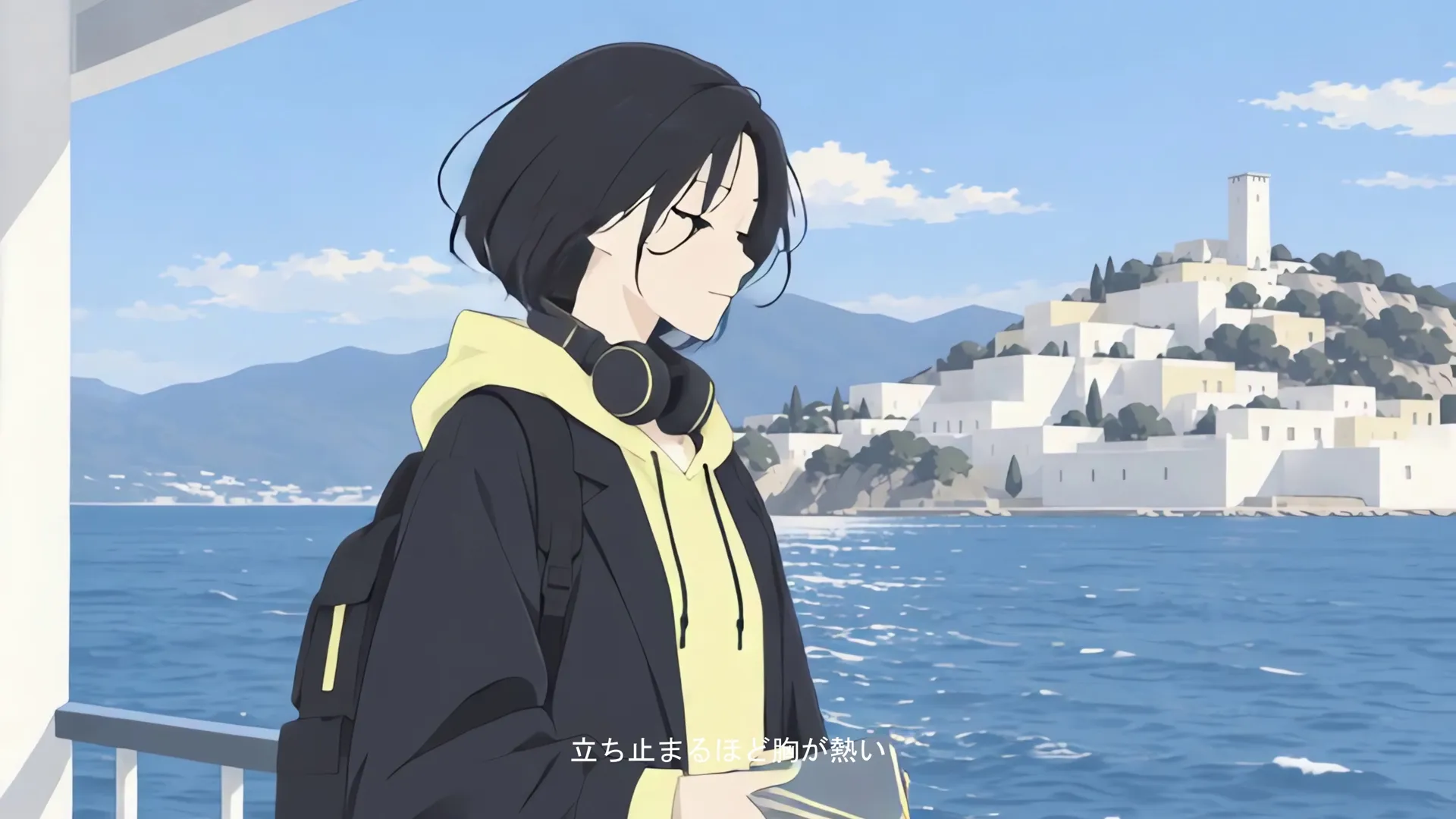
Watch the Japanese remastered music video · Japanese audio and lyrics · English audio and lyrics
The ending follows the two after their return, then leaves the station’s light and wind in view.
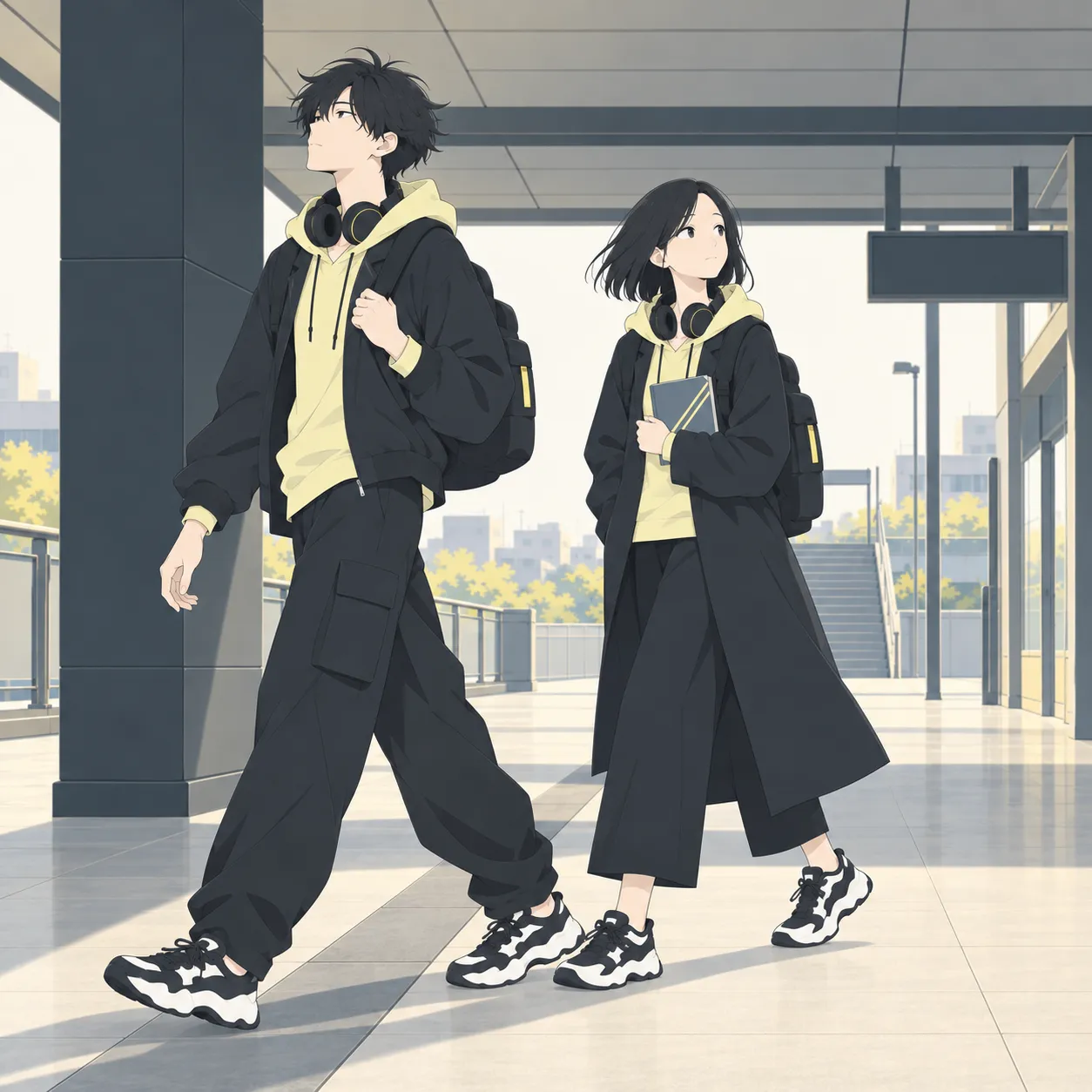
This time, I gave the older song the time these two spend walking through its places. Their singing faces matter, and so do the view outside the window, the stall lights, and the moments when they walk side by side.
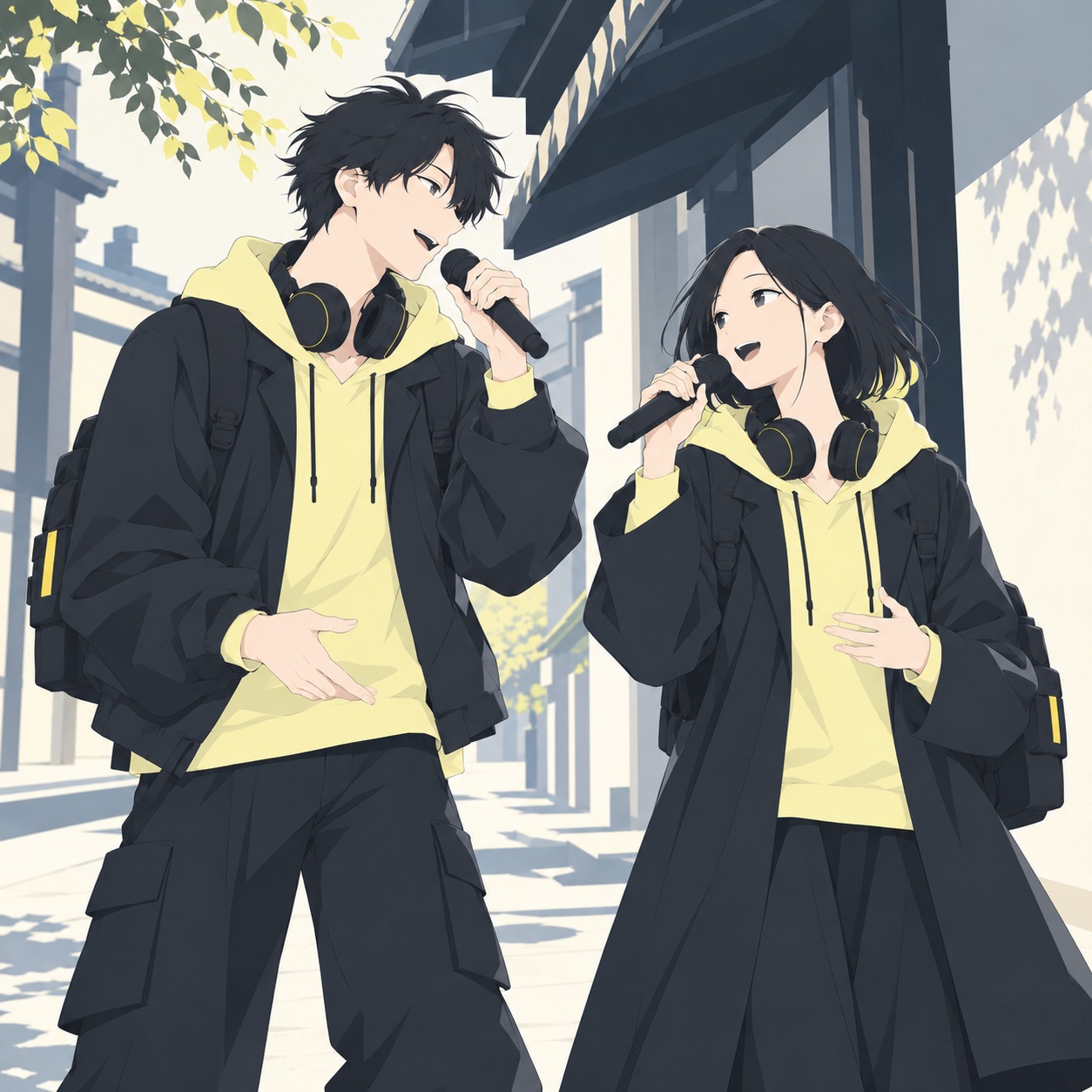 melodic rap / hip-hop / alt-pop未完成のまま(Remastered)Open the song page for audio, lyrics, and notes.Explore this song →
Thank you for reading.
← Back to the journal