
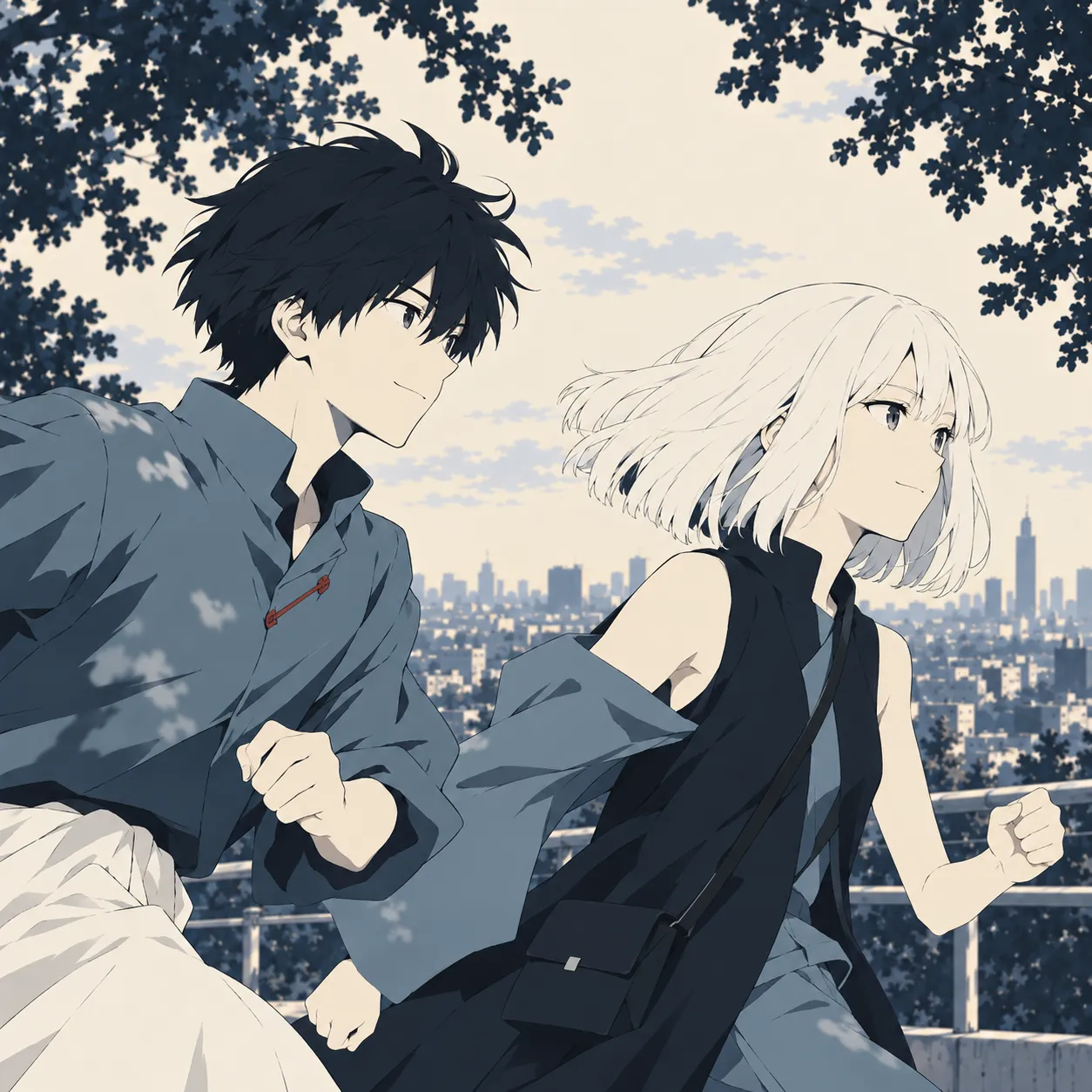
I first wanted “Oikaze” to be a clear, modern ninja anime opening. But I had trouble bringing the necessary scenes and action together in one video. So I kept the characters’ feel and limited color palette, and rebuilt the story around two people walking and running through the same city. The lyric’s movement from finding someone to wanting to run beside them became the center of this version.
The city in the photograph, and the city today
At the opening, there are boxes in the girl’s room. She slips an old photograph of the city into a small black bag and goes out. The video does not explain what is about to change. I wanted to leave a little of the distance in the lyric about things still left unsaid between these two people.
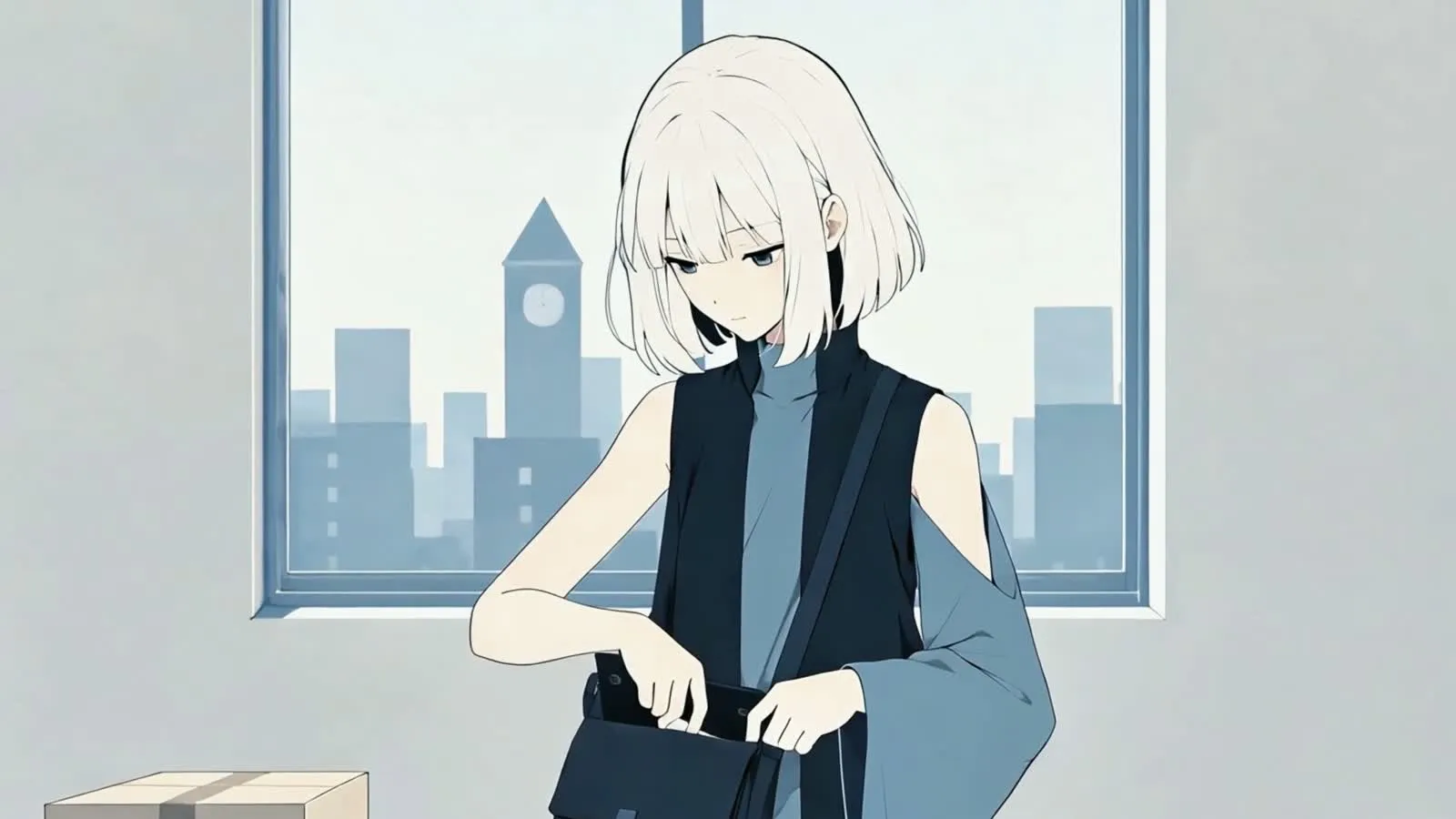
A printed photograph may feel a little unusual now. I thought that slightly old-fashioned detail suited this city, with its clock tower and narrow streets.
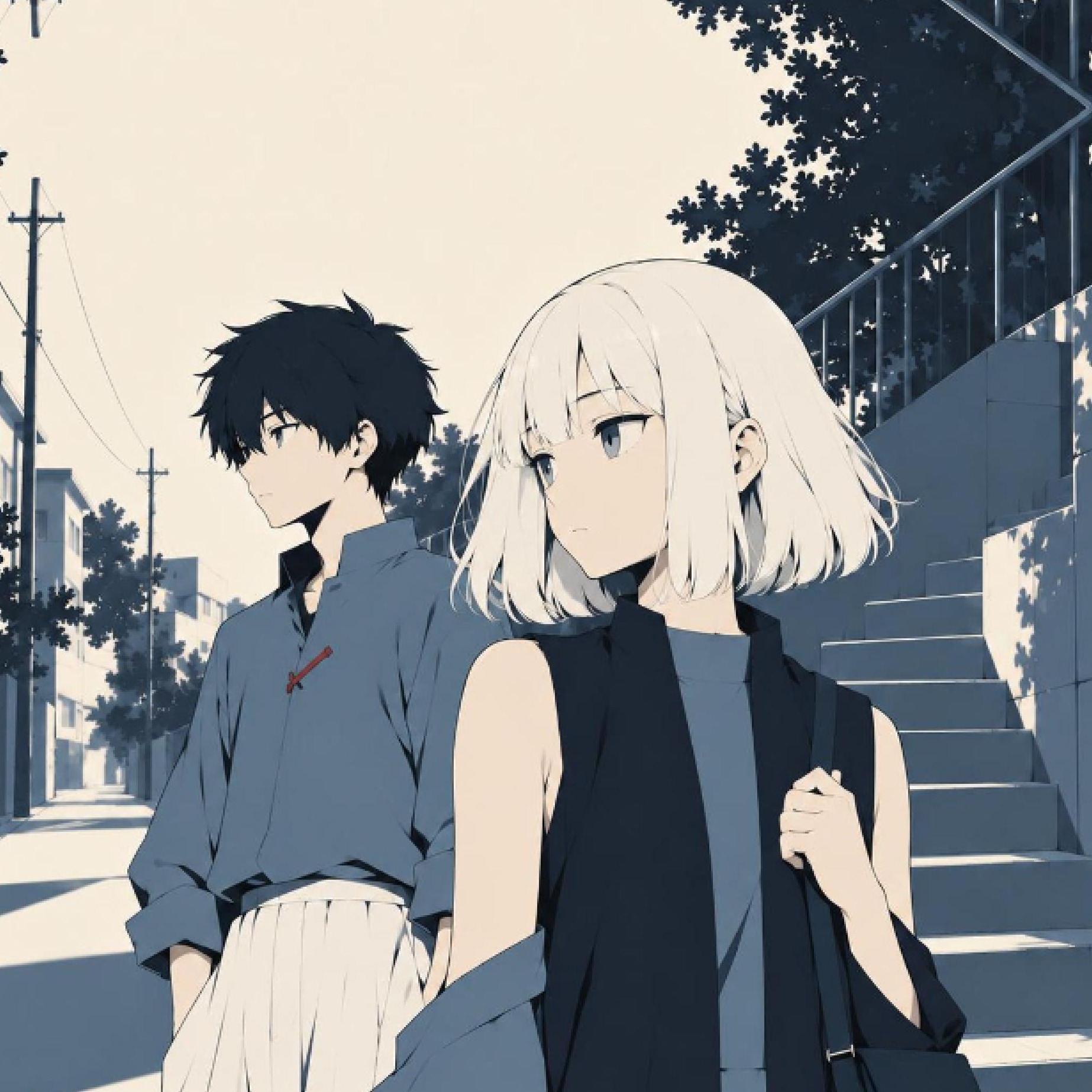
In the morning, the boy spots her. They begin walking side by side, and later, after school, share the same streets again. Near the end, she starts up the stairs first; he catches up beside her. I wanted both of them to choose that route and arrive together.
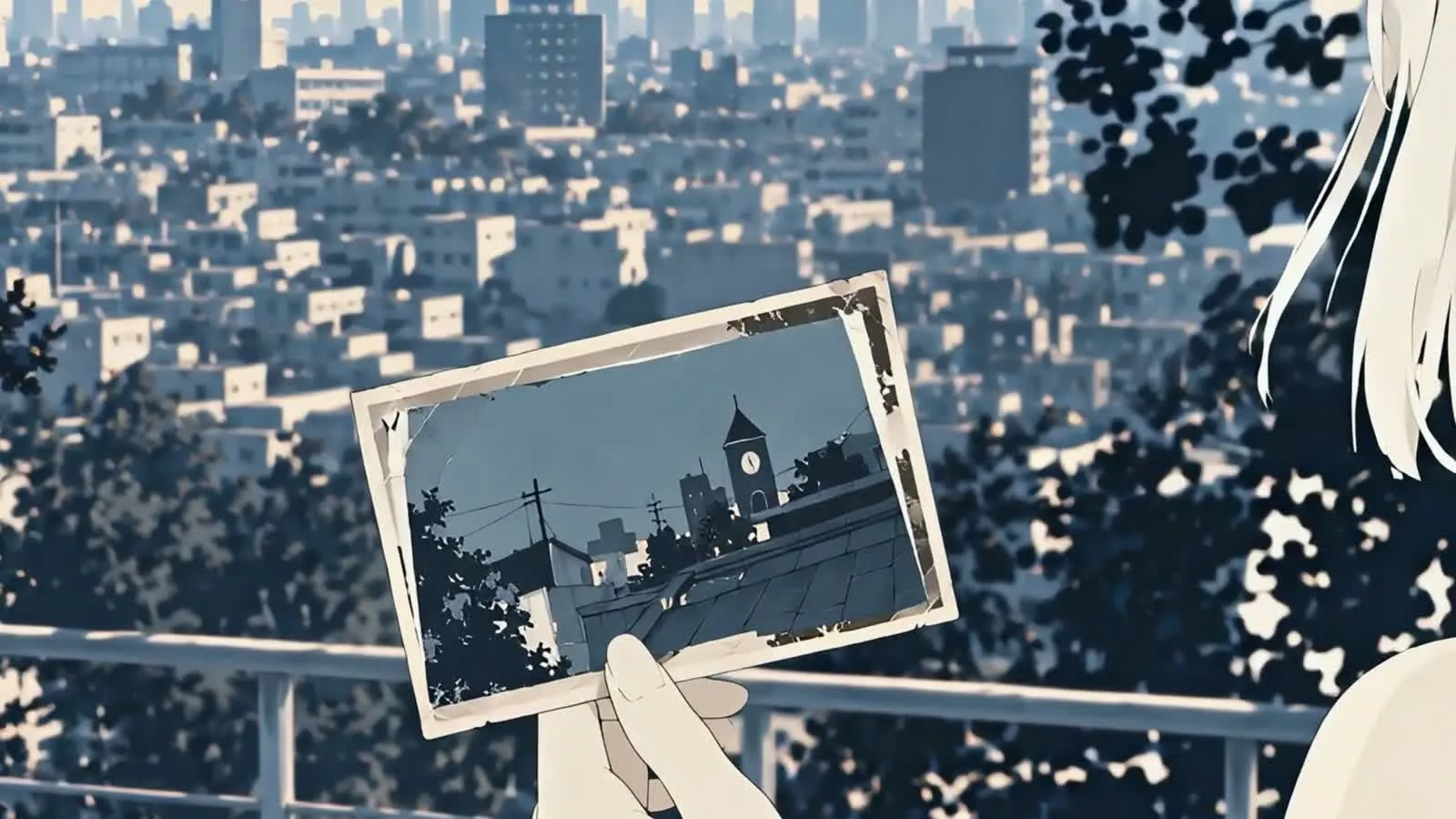
At the overlook, she takes out the photograph and compares its city with the one in front of them. They cannot step back into the time held by that picture, but they can look at today’s view together. I hoped this quiet moment would connect with the lyric about a scene the two of them had seen before.
Give the chorus somewhere to go
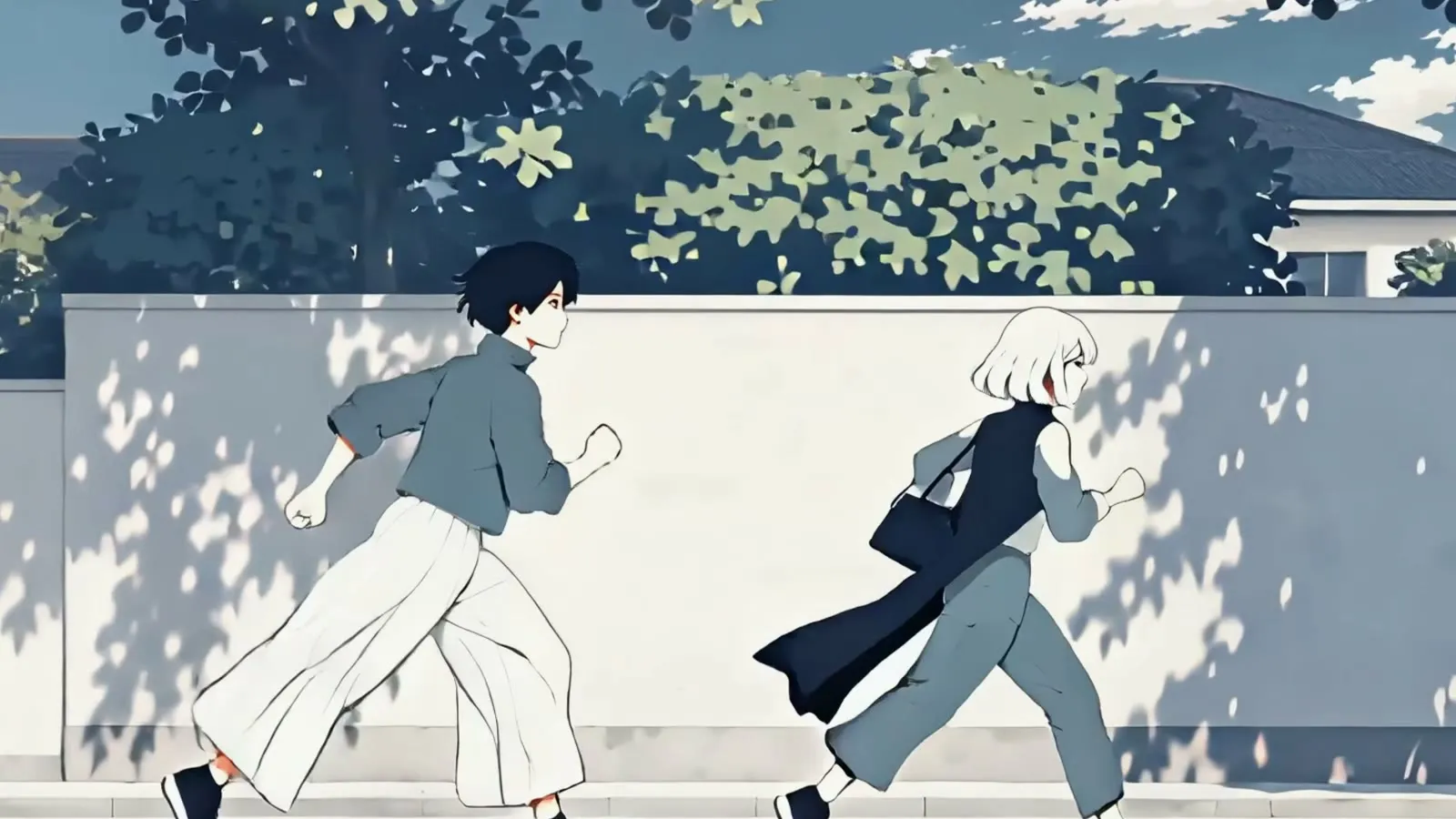
The structural rule was to let them walk before the chorus. The track already has a strong pulse, but if they started at a sprint, the chorus would lose its visual lift. They meet on an ordinary residential street, exchange a look, and fall into step. When the chorus arrives, they can both break into a run.
In an early overhead view, they are heading toward the same crossing on opposite sides of a planted strip. Showing that distance first helps their later walk together feel like a change.
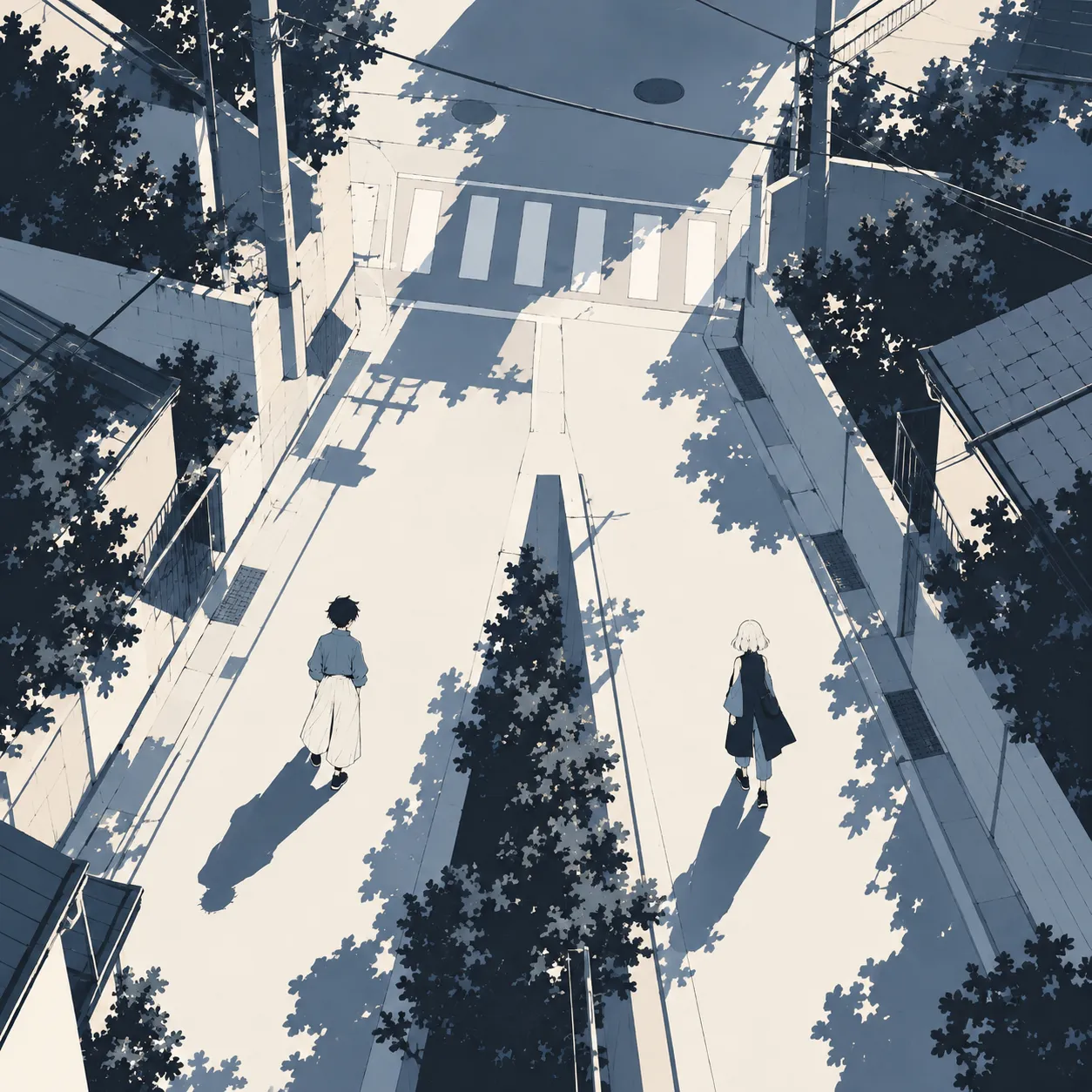
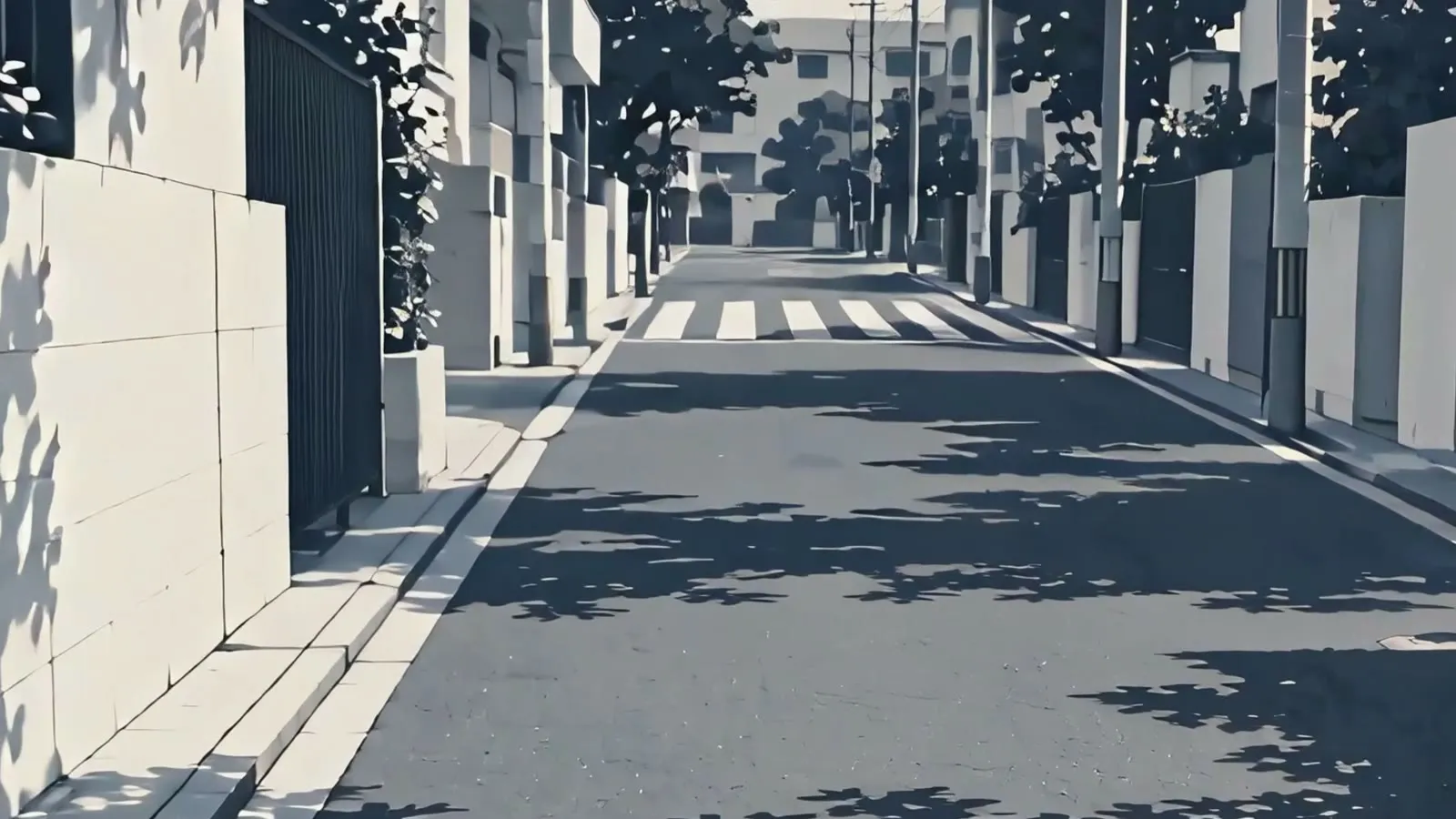
Walking also needs rhythm. I alternated close views of faces and feet with side views of the pair, tree shadows, and wider shots of the street. An empty stretch of road can be useful here. It gives the viewer a sense of the place they are crossing, and it gives the next character shot room to breathe.
From a ninja anime opening idea to this city
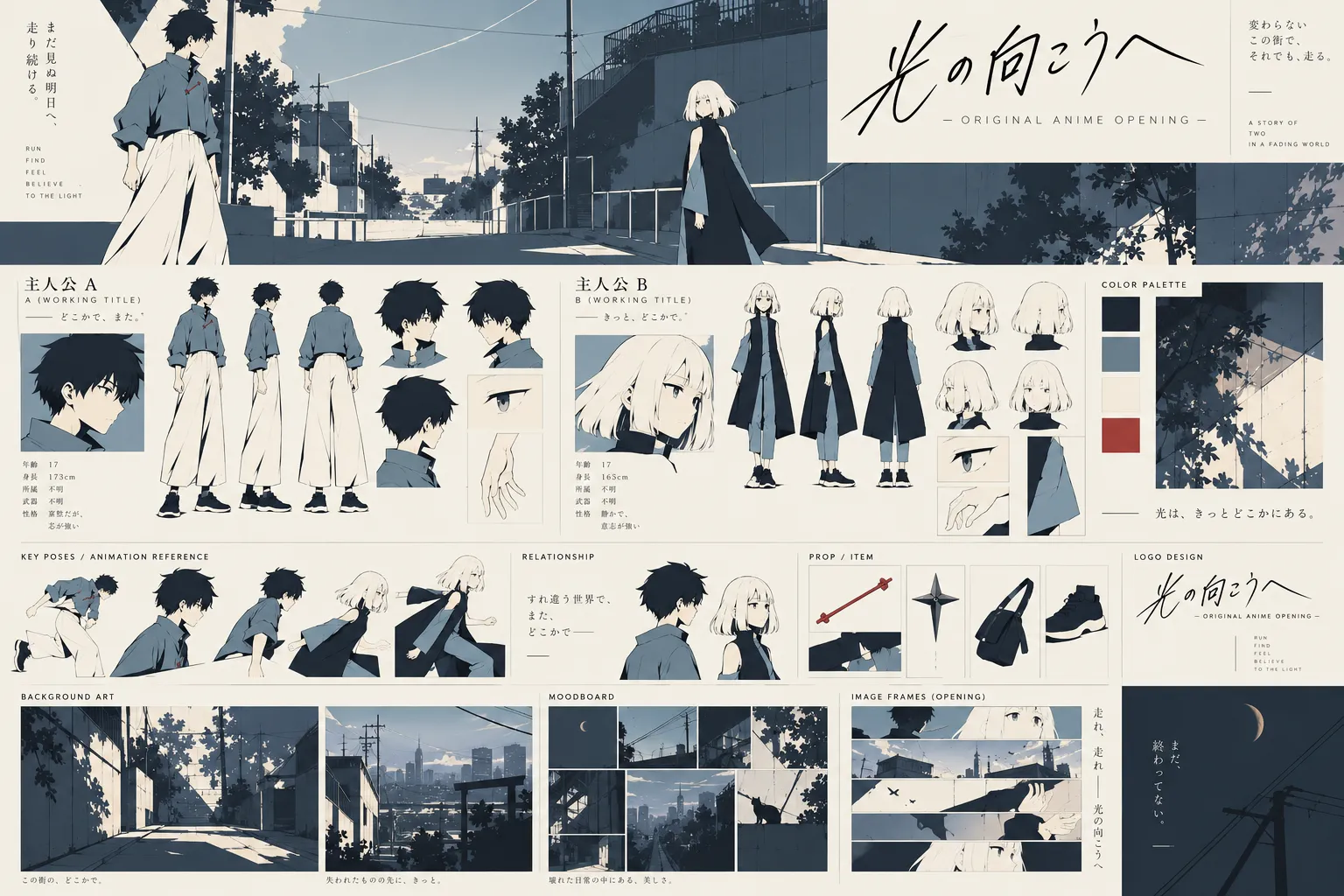
The first idea would have introduced ninjas moving through a present-day city. I liked the two characters in the design sheets, so I carried over their hair, clothing, and restrained colors. In this version, I focused on the time the girl with the photograph and the boy spend following the same route. That change of direction is part of how the video was made.
The locations are homes, school, narrow streets, stairs, and an overlook. Pale walls, tree shadows, utility wires, and the clock tower return as the day goes on, helping the morning and afternoon feel like parts of the same city. Wind moves their hair and clothes as their pace changes.
The character sheet became my reference for every scene: the boy’s dark hair, muted blue-gray top, and wide ivory trousers; the girl’s white bob, long black vest, blue-gray sleeves, and trousers. The city uses navy, blue-gray, and ivory, with a very small touch of red. Sparse lines and broad shapes of shadow matter too. New angles and locations still need to look as though they belong to the same video.
Some problems only appeared when one shot followed another. Repeated views of the boy behind the girl made their relationship feel wrong. A flat street abruptly became a slope; stairs or travel direction failed to match. In one frame, the girl’s neck and body did not agree on which way she was turning. A shot can look appealing on its own and still break the journey when it is placed in sequence.
So I revisited where the pair stood, which way they were going, and how each street connected to the next. I changed similar neighboring shots, added views of the surroundings at location changes, and checked clothes and colors against the reference again. These are small decisions, but in this video the act of moving forward together is the story.
Running with the song is still the hard part
The chorus changes their pace. I planned side views of the pair running together, frontal views, and angled shots that follow them through the city. Close expressions alternate with open streets. Those changes of scale and direction aim for the energy I associate with an anime opening.
The actual running motion has been harder to make look clean. A still frame may carry speed, while several seconds of continuous movement expose problems that the still cannot show. Lately I have been using a DOMO AI model to turn the images into video. A different, higher-end model might give the run more speed, but I want this video to stay with one video-generation model throughout. That choice gives the work a consistent approach, while the running shots remain something I want to improve.
When I wrote about story-led music videos, I was thinking about how a song could carry one continuous story from beginning to end. In “Oikaze,” that story runs from a photograph put away in the morning to a shared view from the hill. I still want to improve the running motion. What I am glad we achieved is the feeling of staying with the same two people as they make their way through the city.
 Industrial rock / Japanese alternative rock追い風Open the song page for audio, lyrics, and notes.Explore this song →
Thank you for reading.
← Back to the journal